


ADV 101: All About Tires (And Compromise)


Adventure motorcycles are designed to blur the line between pavement and dirt, and a key component that influences how well they perform in both arenas is tire choice. Tires determine how confidently a bike corners on asphalt, how predictable it climbs through loose gravel, and how manageable it feels when conditions deteriorate. For many riders, selecting adventure tires can feel overwhelming because the category itself spans everything from long-distance touring to aggressive off-road travel.
VIDEO: CA ADV 101: All About Tires (And Compromise)
Motorcycle.com thanks Yamaha for sponsoring this new rider series.
The reality is that there is no perfect adventure tire, because adventure riding itself is a compromise between dirt and tarmac. Every tire in this class represents a balance between grip, longevity, road comfort, noise, stability, puncture resistance, and off-road capability. The key is understanding those compromises and choosing a tire that matches how you actually ride, or hope to one day.
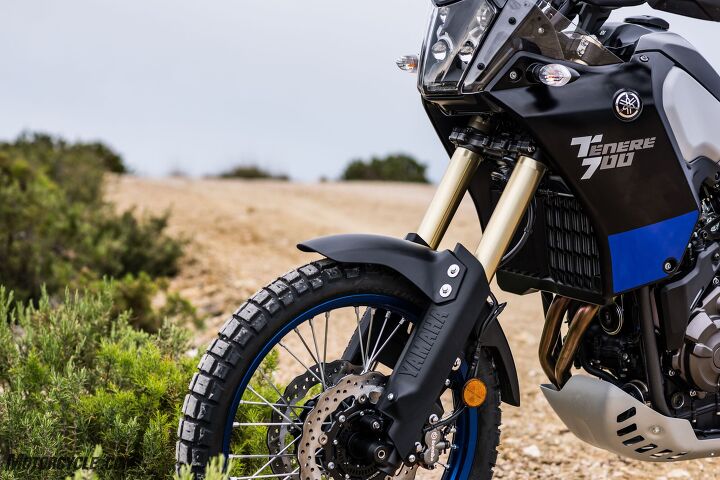
The Spectrum: Street-Oriented vs Dirt-Oriented Adventure Tires
Adventure tires exist on a broad spectrum. Riders often refer to tires using percentages such as “90/10,” “70/30,” or “50/50,” which loosely describe the intended pavement versus dirt use.

A 90/10 tire is primarily designed for pavement, with enough tread and carcass design to handle maintained dirt roads and light gravel. These tires typically have a smoother tread pattern with narrower sipes and larger contact patches, which improves cornering stability, braking, wet-weather grip, and tire life on asphalt. They are ideal for riders who spend most of their time commuting, touring, or carving mountain roads but occasionally venture onto forest service roads.
A 50/50 tire sits closer to the middle ground. These tires feature larger tread blocks and more open spacing to improve traction in loose terrain while still remaining reasonably civilized on pavement. They are popular among riders who genuinely split time between asphalt and dirt and need versatility more than specialization.

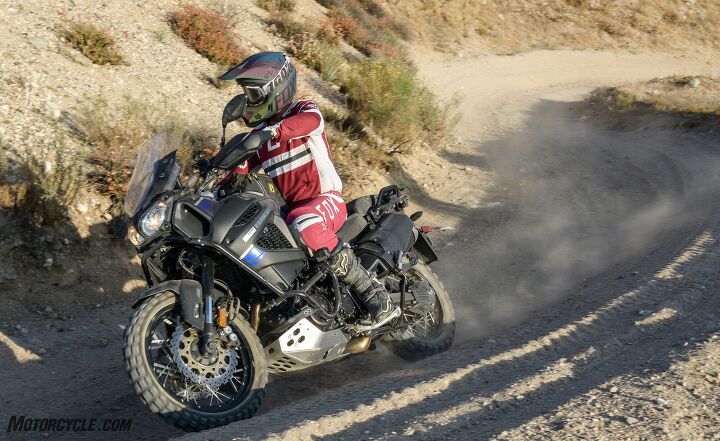
At the aggressive end are 30/70 or even 20/80 tires, which prioritize off-road traction. These tires often have deep, widely spaced knobs designed to bite into sand, mud, loose rock, and technical terrain. They can transform a heavy adventure bike off-road, but the tradeoff is usually increased noise, vibration, reduced cornering confidence on pavement, and shorter lifespan.
As a newer adventure rider, choosing tires that are too street-oriented can make off-road riding more difficult because they offer much less grip in the dirt. You could find yourself struggling off-road, especially in loose terrain where traction and predictability matter most. For riders learning dirt skills, a more aggressive tire can actually make the experience safer and more enjoyable. A tire that hooks up consistently in gravel or dirt allows the rider to build confidence instead of fighting constant front-end washouts or rear-wheel spin.

If you’re an experienced street rider looking to get into the dirt, you might find yourself missing the grip and control of tarmac-focused rubber. More aggressive tires also tend to wear faster, especially under heavy throttle on pavement. All this may be a worthwhile tradeoff. It is often better to replace tires a little sooner than to spend months wrestling with tires that are beyond your skill level in the dirt.
How Riding Style Should Influence Tire Choice

The best tire for a rider crossing the continent on mostly pavement is completely different from the best tire for someone riding desert trails or rocky mountain passes.
Before selecting a tire, riders should honestly evaluate their primary riding conditions:
- Are most miles highway touring?
- Do you regularly ride wet pavement?
- Are you riding deep sand, mud, or rocky terrain?
- Is the bike heavily loaded with luggage?
- How important is tire longevity?
A rider doing long-distance touring with occasional dirt roads may prioritize stability, mileage, and low road noise. Meanwhile, a rider tackling extended off-road routes or remote trail systems will likely value off-road traction above all else.
Heavy bikes also influence tire wear and handling dramatically. A fully loaded adventure motorcycle can easily exceed 600 pounds before adding rider and gear. Softer tires may grip well initially but disappear quickly under that kind of weight and power. Conversely, harder compounds may last longer but feel sketchy or harsh in technical terrain as the stiffer rubber resists biting into the terrain.
There is also an experience factor. Skilled off-road riders can compensate for less aggressive tires through throttle control, body positioning, and momentum management. Newer riders generally benefit more from tires that provide additional mechanical grip.

Tubed vs Tubeless Tires
Tube-type setups are common on off-road-focused motorcycles, especially those using spoked wheels designed for rough terrain.
The primary advantage of tubed tires is durability in harsh off-road conditions. Traditional spoked rims often flex better under impacts and can be less likely to crack when smashing through rocks or potholes. Tubes also allow riders to continue using off-road-focused wheels that may not seal properly for tubeless operation.

CAPTION: Tube-type rims can often remain inflated even after experiencing severe impacts that would prevent a tubeless system from working.
Another advantage is field repair flexibility. A damaged tube can often be patched or replaced trailside using basic tools. In remote travel scenarios, carrying spare tubes provides a reliable backup plan.
However, tubed tires come with drawbacks:
- Flats require wheel removal
- Repairs can be more time-consuming compared to tubeless
- Pinch flats — where the tube gets pinched between the tire and wheel, resulting in a laceration of the tube — are possible at lower pressures
- Heat buildup at sustained highway speeds can become an issue
- Tube failures can occasionally result in rapid deflation
Changing tubes on large adventure bikes can also be physically demanding, especially in less desirable conditions like fixing a flat in the snow. Practicing and perfecting your tire swap technique in the comfort of your home can build confidence that you know what to do should you need to fix a flat on the trail.

Tubeless Tires
Tubeless systems have become increasingly common on modern adventure motorcycles because they offer several practical advantages for touring and mixed-surface travel.
The biggest benefit is ease of puncture repair. Most tubeless punctures can be fixed externally using readily-available plug kits without removing the wheel. This is a major advantage during long-distance travel.
The downside is that tubeless rims can be more vulnerable to severe impact damage. A bent rim lip may prevent proper sealing, and repairs require converting the wheel to a tube-type setup temporarily. Additionally, seating a tubeless bead in the field can sometimes be difficult without access to compressed air.

Some riders also convert tubed spoked wheels to tubeless systems, though opinions vary on the reliability of those modifications.
Ultimately, neither system is universally superior. Riders focused on rugged off-road terrain may still prefer tubes for simplicity and wheel resilience, while riders emphasizing long-distance travel and convenience often favor tubeless setups.
Wheel Diameter and Tire Behavior
Adventure motorcycles commonly use several wheel combinations, most notably:
- 21-inch front / 18-inch rear
- 19-inch front / 17-inch rear
- 17-inch front and rear
Wheel diameter significantly affects handling characteristics, tire selection, and tread behavior.
A 21-inch front wheel is generally preferred for serious off-road riding because it rolls over obstacles more easily and tracks better in loose terrain. The tradeoff is reduced pavement sharpness and slower steering response.
A 19-inch front wheel offers a middle ground. It provides better road manners while still maintaining decent off-road capability, which is why many larger adventure touring bikes use this setup.

An important detail to consider is that the same tire model can behave differently depending on wheel size. Manufacturers frequently alter tread block spacing and arrangement, carcass profile, and sidewall characteristics across different diameters.
For example, a tire available in both 21-inch and 19-inch front sizes may look similar but not identical. The 21-inch version may have slightly different block spacing, sidewall height, or profile curvature to improve off-road tracking, while the 19-inch version may prioritize pavement stability.
The overall character of the tire remains similar, but riders should understand that performance is not perfectly interchangeable across wheel sizes.
Tire Lifespan: The Constant Compromise

Tire longevity is one of the most important balancing acts in adventure tire selection. Every tire design represents a compromise between durability, grip, stability, and off-road capability. Riders naturally want a tire that lasts forever while still providing excellent traction everywhere, but in practice those goals often work against each other.
Generally speaking, the characteristics that improve off-road traction — softer compounds, taller tread blocks, and more aggressive patterns — also tend to accelerate wear on pavement. Meanwhile, tires designed for long highway mileage usually sacrifice some degree of loose-surface grip and off-road predictability.
Several factors dramatically affect wear:
- Motorcycle weight
- Rider aggression
- Terrain
- Tire pressure
- Ambient temperature
- Load carrying
- Terrain composition
- Speed

Aggressive knobby tires can disappear surprisingly quickly on high-horsepower adventure bikes, especially during extended highway travel. Some rear tires may only last a few thousand miles under hard use. Personally, I’ve killed sets of tires in under 300 miles riding through what could be considered extreme terrain.
Conversely, harder street-oriented tires may last many thousands of miles but offer substantially less off-road confidence. One thing to consider about off-road-focused adventure tires is that they often seem to get a last gasp of endurance near the end of their life.
By way of example, the original Continental TKC 80 is a legendary adventure tire which is known both for its versatile capability and relatively short lifespan. However, that lifespan often comes in increments — the first 70-80% of the tire disappears in roughly the first 50-60% of its range, and the remaining 20-30% of the tire seems to run on much longer than you might expect. Just know you’ll likely be staring at almost nonexistent tread blocks towards the end of your journey.

There is no magic solution. Generally speaking:
- More grip equals shorter life
- Better off-road traction equals more pavement wear
- Softer compounds wear faster
- Large tread blocks move and flex more under acceleration
Riders should avoid obsessing solely over mileage numbers because tire performance likely contributes more to both the overall riding experience and safety during an adventure ride.
Ease of Installation and Trailside Repairs
Not all adventure tires are equally cooperative. Some tires feature extremely stiff sidewalls and heavy carcass construction designed for puncture resistance and load support. While those characteristics can improve durability, they can also make tire changes brutally difficult.
The Maxxis Desert-IT is a perfect example. It is famously rugged and highly respected in harsh desert conditions, and that strength has its own consequences. Prior to the start of a high-profile organized ride in Baja, I heard the project lead half-jokingly say that anyone running the Desert-ITs “would not have anyone helping them if they get a flat”.
By comparison, the aforementioned Continental TKC 80 earned a reputation for being relatively easy to mount and dismount thanks to its softer carcass construction. That softer structure makes roadside repairs more manageable, though it also comes with tradeoffs in longevity.
While some tires may make repairs more difficult than others, any tire can be fixed in the field. It’s all a matter of mastering the proper technique, with the same tools you’re carrying on the bike.
Final Thoughts
All things considered, adventure tire selection is about honesty and priorities. Riders should choose tires based on where they ride, how experienced they are, and what compromises they are willing to accept.
There is no universal “best” adventure tire. The ideal setup for a rider crossing continents primarily on pavement differs dramatically from the ideal setup for someone navigating rocky single-track or deep desert sand.

Understanding tread design, wheel sizes, tire construction, repairability, and lifespan helps riders make informed decisions rather than chasing marketing claims or internet hype.
The best adventure tire is not necessarily the most aggressive, the longest-lasting, or the most expensive. It is the one that gives the rider confidence where it matters most.
Become a Motorcycle.com insider. Get the latest motorcycle news first by subscribing to our newsletter here.
More by Jon Beck






Comments
Join the conversation
I've run lots of different tires, from Shinkos (never again) to Michelins, Gripsters, Karoos, Tourance, etc
I've settled on the AX41 Bridgestone for my 890. Pretty good off-road traction at 25 psi. Stick like glue to pavement. Been getting ~5k miles out of a set. Bridgestone offers rebates a couple times per year, so you can save a few bucks if you plan ahead. Biggest plus, they are smooth and quiet.
Thank you for your feedback. I'm 70, so not into leaping logs or tough single track, but always thought the trials tire pattern would be a nice compromise. The nature of the compound would surely matter, as they need to be able to do pavement without vanishing in 2000 miles. I just wanted a bit more Bite on dirt and gravel, possibly slightly muddy paths. I had a 71, 125cc Suzuki Duster that came with a trials pattern. Had good luck on many surfaces. Of course I was light, as was the bike, so pavement use was not a full stress test.