


Bore & Stoke Breakout: Galluzzi On Why the EV Revolution is Stalling

Less than a decade ago, the global transportation industry was unified in its messaging: internal combustion was on its deathbed, and an all-electric vehicle revolution was imminent. Yet today, automotive giants and motorcycle conglomerates alike are hitting the brakes, dialing back EV production targets, and adopting a cautious "wait-and-see" approach.
While many blame public charging infrastructure, design icon Miguel Galluzzi points to a more fundamental economic and resource barrier: the complete failure of battery costs to scale downward.
This presents an ICE vs. EV paradox. Light mobility, such as bicycles and scooters, features small battery footprints, low production resource costs, and affordable consumer pricing. Conversely, heavy utility platforms, like pickup trucks and full-sized motorcycles, require massive, heavy battery packs, create a dependence on rare mineral monopolies, and command prohibitively high market retail prices.

The Mineral Monopoly
Galluzzi’s history with electric motorcycles runs deep. As early as 2007, he helped develop a prototype electric Aprilia RS250 Grand Prix bike equipped with a three-speed gearbox that performed remarkably well on closed circuits. In 2010, he moved to California and collaborated with the engineers at Mission Motors, testing high-performance electric superbikes up in the mountains.
He was an early believer, but the macroeconomic context completely shifted.

“Back in the early 2000s, engineers were expecting battery prices to steadily drop through global competition,” Galluzzi points out. “But the reality is that the Chinese industry secured a total monopoly on the raw minerals required from South America and Africa. Because of that monopoly, battery prices haven't gone down; on the contrary, they are going up. Until battery pack costs drastically drop, high-end electric vehicles cannot succeed without permanent government subsidies.”
The Weight-to-Utility Failure
Galluzzi points to vehicles like the Ford F-150 Lightning as the prime example of the EV packaging paradox. To make a heavy vehicle perform the same utility tasks as a lightweight internal combustion engine, manufacturers must pack thousands of pounds of batteries into the chassis, making the vehicle incredibly heavy and resource-intensive to produce.
Where traditional ICE layouts package the engine to fit seamlessly into the overall vehicle architecture, the mistaken EV approach frequently shoves heavy, rigid battery cells directly into a standard frame.
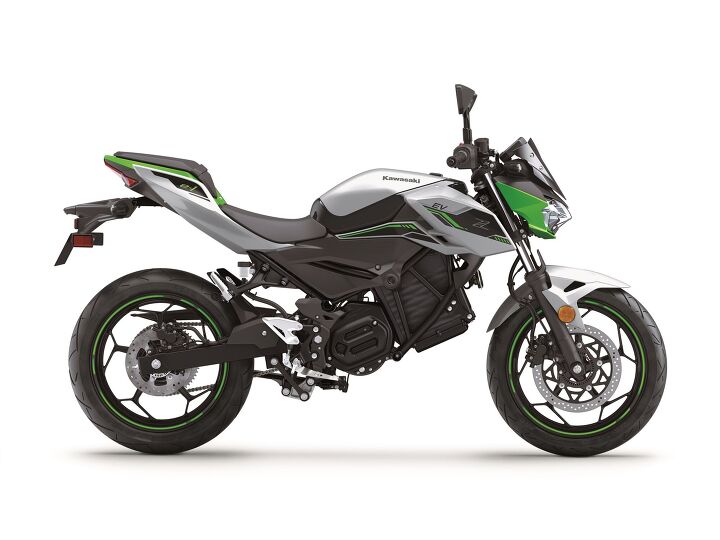
In the motorcycle world, this structural flaw is amplified. Most electric motorcycle startups simply took a traditional motorcycle outline and shoved a massive, boxy battery pack inside it, creating heavy, expensive machines with limited range.
True innovation, Galluzzi argues, requires throwing out the motorcycle silhouette entirely. Electric power only scales efficiently at the opposite extremes of mobility: either ultra-light personal urban transport like e-bikes and urban scooters, or entirely new, single-wheel commuter form factors that bypass traditional vehicle architecture completely.

Check out the Bore & Stoke episode with Miguel Galluzzi here to listen to the full interview.
Become a Motorcycle.com insider. Get the latest motorcycle news first by subscribing to our newsletter here.

Motorcycle.com presents an unrivaled combination of bike reviews and news written by industry experts
More by Motorcycle.com Staff






Comments
Join the conversation
I have 4 motorcycles and I can't ride any of them for 250 miles without stopping. I don't think Harley has ever built a bike that goes 250 miles without buying gas and I know I've never owned a motorcycle of anytype that can go 250 miles without gas. If you need a 250 mile range then you will most likely always be giving your money to the Middle East Muslims. It's not 250 miles to work an back for most people and also most people don't ride 250 miles of trail in a single outing.
EV became a thing because of the CLIMATE HOAX. Otherwise, EV's can't perform with ICE. There certainly are urban roles EV's can perform, perhaps better than ICE's, but overall EV's can't compete. Now that the HOAX is known, designers are returning to ICE's.