


Why Ride a Motorcycle?
From efficiency and economy to skill-building and discovery, nothing beats a bike.
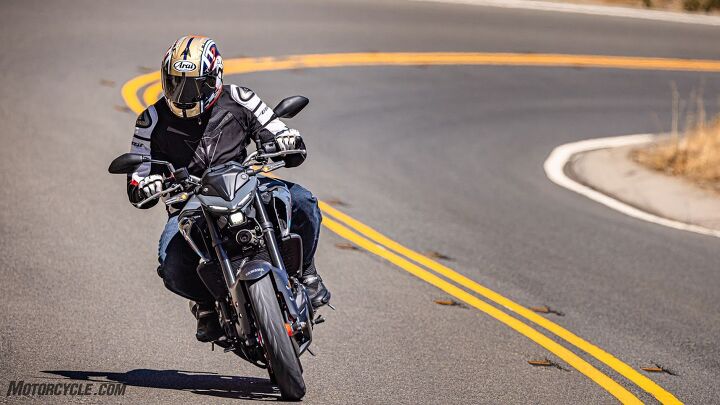
The marriage of the early 20th Century “safety bicycle” and a simple engine created the motorcycle template as we now know it. As such, at their design core, motorcycles are simple, efficient devices, a trait they’ve possessed for over 120 years. But it takes more than efficiency to ensure the survival and evolution of any consumer product. The secret other ingredient is that motorcycles feed us on some essential levels, from the joy of being in motion, to rewarding us for problem solving, to promoting social interactions, to building a skillset that “normal” folks don’t possess. Read on for seven reasons you might want to ride a motorcycle.
Motorcycle.com thanks Yamaha for sponsoring this new rider series.
I – Ease of Movement
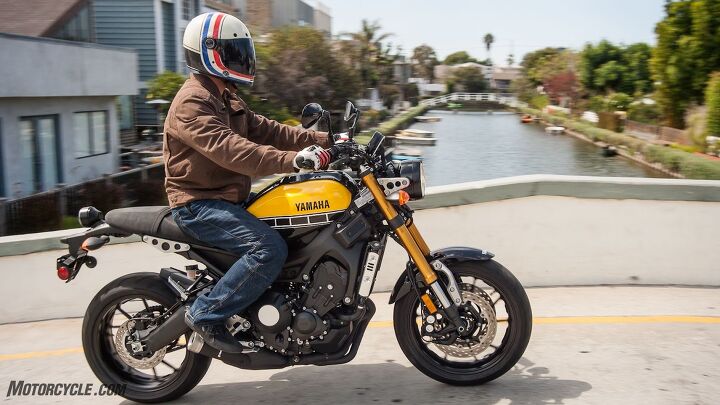
Dodging Traffic, E-Z Commuting, and Parking
In an experiment conducted years ago, motorcycling beat driving a car, taking the bus, bicycling, walking, and even running to work. In short, it was the fastest and most convenient commuter method, best at avoiding traffic bottlenecks, and allowed the easiest (and free in some cases!) parking. The only positive aspect that commuting by motorcycle didn’t offer was the physical workout that pedestrians and cyclists get. But the time saved by motorcycle commuting in both directions, five days a week (or thereabouts, given today’s remote-work morays), leaves plenty of time for workouts.
II – Saving Money
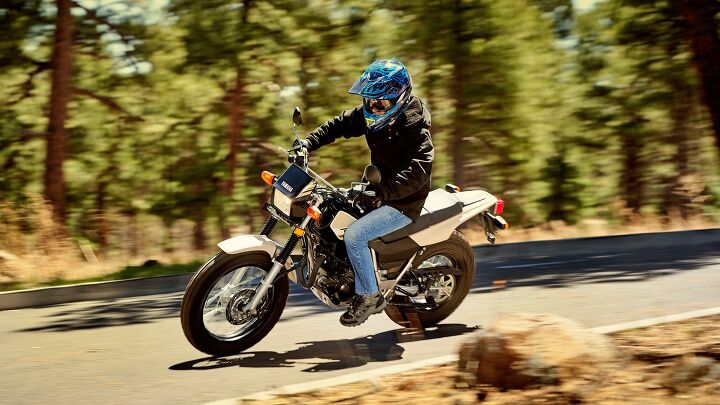
Lowering Your Cost Per Mile
Motorcycles can put hybrids to shame when it comes to economy. Want to really stretch your transportation budget? Buy a bargain used 100cc to 125cc street bike from the 1970s or 1980s and count on 100 mpg – or close to it. That’s twice what you might expect from a new hybrid car. For a couple thousand dollars, and relatively cheap insurance, you’ve soundly beaten the high price of transportation.
And if your travels require freeway or tollway transit, bump the bike displacement to 150cc or above – or whatever the threshold is in your state (bigger is generally better). You’ll in some cases find the HOV lanes are legally yours aboard a bike – even if you’re riding solo. Incidentally, as we found out the hard way once, check your auto roadside assistance policy to make sure it includes motorcycle flat bedding. Ours didn’t, but adding an inexpensive plan supplement took care of it.
III – Social Engagement
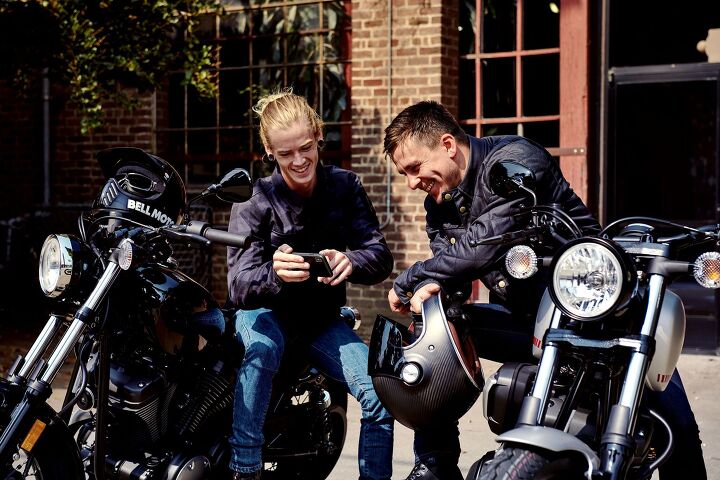
Nothing Like It with Friends
A scene from On Any Sunday really nailed the social aspects of motorcycling – in this case, a casual day of “cow-trailing” with buddies. “There’s something about going riding with your friends – a feeling of freedom, a feeling of joy, that really can’t be put into words,” narrated Bruce Brown. “It can only be fully shared, by someone who’s done it.” Add those words to the film’s visuals – Mert Lawwill, Steve McQueen, and Malcolm Smith riding side-by-side on dirt roads and sand dunes – and the scenes have probably inspired thousands or even millions to experience the same bond.
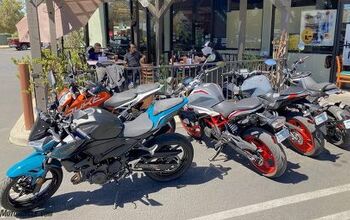
Once you’re “out there” on a bike, you’ll discover an amazing organic social kinship. Riders who’ve never met and never will meet wave at each other. Parked at a store or restaurant, your bike draws strangers to you; it makes you interesting. And you are interesting, too, because you ride. And since riders all share the same experiences – discovery, wonder, heat, cold, wind, and yes, some danger – wherever you stop and meet, you have something powerful in common.
IV – Pursuit of Pleasure
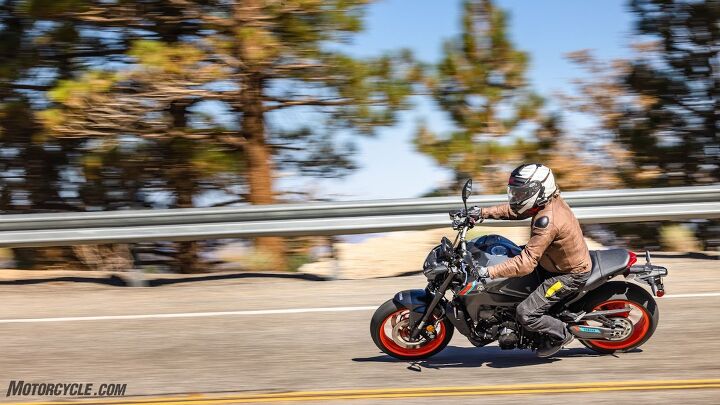
In Motion on a Motorcycle
Proponents of motorcycling often remark that they’re in a better mood while riding, and after riding. Why is that? We’d propose that because motorcycling always demands your full attention, it truly takes you away from ordinary concerns and worries that can otherwise accompany us throughout the day. So, in a way, because motorcycling distances us from worry, it has therapeutic qualities.
Equally important, being in motion on a bike is pleasurable. It uses a way fuller skill set than does sitting behind a desk pounding a keyboard, working construction, or being a clinician. Motorcycling feeds us on both intellectual and sensual levels. If you know, you know. And if you don’t, try it. You’ll find out quickly that riding’s unique sensory inputs are unequivocally fun.
V – Testing Yourself
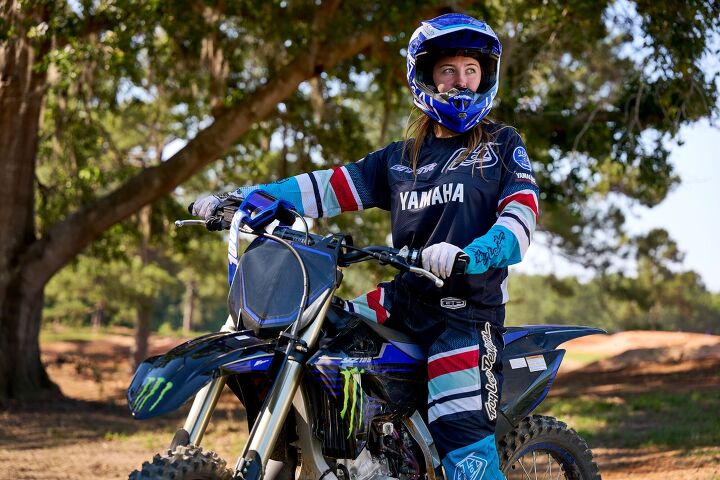
The Excitement of Competition
If you’re of a certain mental makeup, you tend to choose things that are hard to do, and maybe risky ones too. Because you know you’ve got this. “Don’t run with scissors!” your mom might have yelled, years ago. If that’s you, then learning to ride a motorcycle may lead to riding it faster, and then looking for places to go faster still. And the only sane and sensible place to do that is the track.
If your interest is dirt, you can drive up to the gate at most motocross tracks, pay a fee (and sometimes an annual membership), and then ride. The learning is up to you, unless you steer yourself into taking training in a dirt-oriented school (trials, motocross, etc.). If you’re an asphalt guy or gal, the approach is different. Even at a track day, your bike and gear will likely need to pass a formal tech inspection, and you’ll choose (or be assigned) a rider skill group. Sessions are precisely run; corner workers are present and so are EMT services. That’s evolved compared to dirt.
The next logical step is a race school, and then entering races as a beginner or novice. Taking this route, both figuratively and literally, will fully test your skills, fitness, focus, and resolve. We highly recommend it compared to the alternative of shredding tires ever faster on the open road or trail.
VI – Building Skills
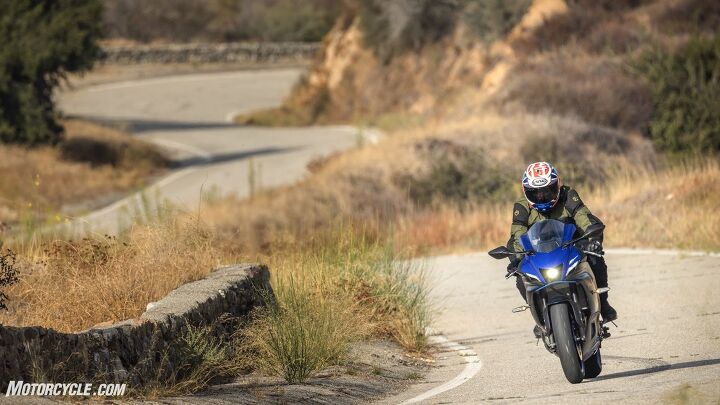
The Pragmatist’s Tool
Without question, motorcycling requires personal resourcefulness and responsibility. If you lack balance skills, you fall over. If you get a flat, you must fix it – or at least find someone who can. And if you get stuck in the sand, you’ve got to dig out. And those are just some of the easier problems you may face if you mess up or misread the situation. As such, every ride demands you wear your “learning cap,” because we can always get better, we can always review important lessons, and we can always correct bad habits.
Examples: If you ride dirt and street, apply your off-road terrain-reading skills to the pavement; looking for water or sand patches on the road, cracks or holes in the asphalt, or camber changes in turns or oil at intersections is a natural extension of a dirt-rider’s savvy, and will only help your pavement career. Or, if you’re following a group of riders, pretend you’re a teacher proctoring a test. Are their movements synchronized; do they leave room for quick evasive maneuvers; and do they avoid each other’s blind spots? If you watch, you will see.
When we learn, we grow. And riding encourages learning.
VII – Expanding Your World
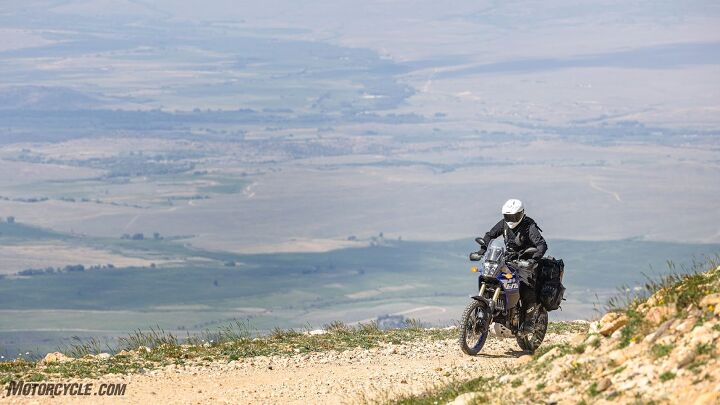
Sightseeing at Its Best
Next to piloting an ultralight aircraft, there’s probably no better way to explore than aboard a motorcycle. Whether you’re chasing the Alaska Highway, tracing an ancient coastline, or connecting forgotten Midwestern towns via backroads, the sense of discovery is better on a bike.
There are actual reasons for this. First, on a bike you can see a lot more, thanks to your exposed riding position and the absence of body pillars and panels. Second, aboard a bike you can literally sense the environment, rather than being isolated from it behind metal and glass (and with the climate control set to Comfortably Numb). And third, like a hunting dog tracking prey, on a bike you can U-turn, double back, and explore tertiary trails and dead ends with ease. Trust us, these actions would be few and far between in a big pickup, camper, or low-slung car. But you’ll take many such opportunities on a bike, just because you can.
Resources
Become a Motorcycle.com insider. Get the latest motorcycle news first by subscribing to our newsletter here.

John L. Stein brings 30 years of both automotive and motorcycle experience, having written for AutoWeek, Car and Driver, Motor Trend, Sports Car International, Chevy Outdoors, Truck Trend, Cycle World, Motorcyclist, Adventure Travel, and Men’s Journal, just to name a few. His articles have been published in the US, England, Japan, Australia and France. His technical knowledge combined with his ability to understand and effectively communicate what a motorcycle is doing underneath him is an invaluable resource to the Motorcycle.com team.
More by John L. Stein






Comments
Join the conversation
Seems most of motorcycle.com comments at 70+ ?
I’m not sure if economic arguments carry much weight. Honestly if you want something cheap to go in city distances and speeds, get an electric bike. You don’t even need a license and it will use no gas at all. Farther to go? Used cars last very well, get one of those for the cost of a mid range cycle. Plus you won’t get wet in the winter. Heck for a lot of the US you can actually USE it in the winter.
I want to get back into cycling because I miss it. Humming along a nice twisty mountain road on a spring day, or along the ocean in the fall, is wonderful. It feeds the soul in a way being in a computer controlled box, isolated from the smells and sounds and sights of the real world cannot. One of my fondest memories was on a summer evening riding through some hilly country and in the low spots the air was cool and filled with the smell of the mint fields on either side. You can’t get that in a car.
And if you want to ride on the freeway, that’s up to you. Where I live doesn’t have them. The highways around here are posted at 90km/hr (about 55 for you Americans) and few people go over 100 (60mph). I’m starting to plan a trip south for a few years from now. Down the Washington and Oregon coasts, and back up on the east side of the cascades. No Freeways anywhere along the trip because I want to be IN the environment not just watch it go by.