


2025 Kawasaki Z900 SE Review – First Ride

A mid-model refresh adds tech to the table

If you’re interested in the middleweight naked bike class, now is a good time to be a motorcyclist. There is a sea of options and all of them bring something to the table. But when you’re faced with so many choices, how do you choose? It’s easy to get lost in the amount of options out there. Case in point? The 2025 Kawasaki Z900. Quietly going about its business, the ol’ Zed has been a stalwart in Kawasaki’s lineup for a few years now.
When the headlines were taken up by Dukes, Streetfighters, Street Triples, and another Japanese rival, the MT-09, the poor Kawi got left behind in my mind. Defined by its brash (for Japanese standards) Sugomi styling, the Z900 isn’t new to the class, but 2025 brings with it a mid-model year refresh highlighted by three letters nearly every motorcycle worth its salt can identify with these days – IMU. The Kawi may have slipped your mind in this sea of options, but Team Green certainly hasn’t forgotten about it.
2025 Kawasaki Z900SE
A mid-model refresh, the updated Z900 and Z900SE benefit from more sophisticated styling and updated electronics to give it a fighting chance in the ultra-competitive middleweight nakedbike field.
Highs
- The new styling looks fresh
- An intake growl to stir the soul
- Cruise control!
Sighs
- Autoblipper can be too slow with downshifts
- The exhaust heat shield is awkwardly placed
- Cramped seat
Thanks to Rokform for making this video possible. Use discount code Moto25 for 25% off at www.rokform.com.

More on the IMU in a minute. But before we talk about what’s new on the inside, let’s take a moment to highlight what’s changed overall, based on what Kawasaki’s own owner surveys of previous Z900s and Z1000s classify as priorities before making a purchase.
Engine
Unsurprisingly, 63% of respondents are most interested in the engine. Kawasaki wants you to think the engine is new, but this isn’t really the case. In reality, there’s a new camshaft profile that effectively moves the powerband a little lower in the rev range (conspiracy theorists might also suspect this move was made as another step to please the emissions gods). Kawi also claims the cam, along with the revised ECU settings and ignition timing, helps to improve fuel economy. Seeing as how the usable power is now shifted lower, this means you won’t need to rev the bike as high. Lower revs means less fuel burned. So, I suppose this checks. Complementing the new engine character are different internal gear ratios (final drive gearing remains the same).

Otherwise, the engine is mostly the same 948cc liquid-cooled Inline-Four we’ve known for some time. Bore and stroke are 73.4 x 56.0mm. Despite Kawi moving the powerband lower, this oversquare layout provides plenty of overrev for a gradual dropoff once past the point of peak power.
Downdraft throttle bodies provide the shortest path for air to reach the combustion chambers. Now, however, the throttle bodies are electronic, which make it possible to have cruise control. Clicking through the gears is also even easier thanks to the KQS (Kawasaki Quick Shifter) now operating in both directions.

Remember above how 63% of respondents were most interested in the engine? Sure, engine power is a big reason, but engine sound and character is another. To that end, it’s worth reminding readers that, while not new, Kawasaki tuned the airbox shape based on acoustic tests to deliver an intake (not exhaust, mind you) note the rider will enjoy throughout the rev range. Kawasaki’s positioning of the air intake facing upwards – towards the rider – is also no coincidence.
Styling
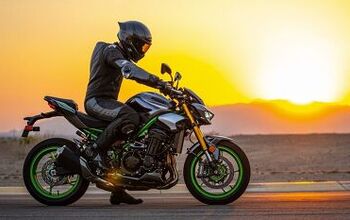
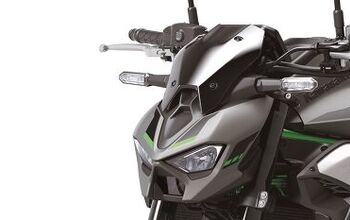
After the engine, 52% of survey respondents say they value a bike’s styling. Of course you would – nobody wants to ride an ugly bike. Continuing Kawasaki’s Sugomi design language for the big Zs, the Z900’s aesthetic can be defined as more refined than all new. When looking at the bike head on, the new triple LED headlight gives Predator vibes with its menacing face. Looking at the side profile, the headlight is the finishing visual touch if you were to follow the high arch, starting from the seat, and finish the line at the headlight. Brushed aluminum shrouds with the Z logo add a little bit of elegance and sophistication.

From here, the new fuel tank cover design is now separate from the shrouds and reveals the frame underneath for a more honest naked-bike feel. Another nod to a more grown-up appearance is the new textured seat and shorter tail section that makes the tail light appear more prominent.
Suspension
We’re of split opinions when it comes to the suspension for Z owners. Only 14% care – with the caveat being only 14% of standard model owners took the standard KYB suspension into consideration. This number understandably jumps to 44% when we’re talking about the SE model and its upgraded Öhlins S46 shock and fully adjustable KYB fork with gold tubes to match its Swedish counterpart in the rear.

Since we’re on the topic of SE upgrades, it’s also worth noting the SE wears Brembo M4.32 radial calipers compared to the new Nissin 4-pot radial calipers on the standard model. Brake discs still measure 300mm in the front for both models, 250mm in the rear. You get steel braided brake lines on the SE, rubber on the standard. And contact with the road is via Dunlop’s new Sportmax Q5A tires measuring 120/70-17 front and 180/55-17 in the rear. Interestingly, if you’re a tire nerd like me, following Dunlop’s closure of its US office in New York, these tires are made in Thailand.
You can’t talk about suspension without talking about the rest of the chassis, and while the new one is similar to the old, there are two minor but notable differences. The first is a new gusset behind the head tube to change the rigidity of the frame. The second is a tweak to the subframe, where the seat section of the frame is flatter before sweeping upwards and finishing at the rear. This was done to maintain the same seat height as before while using a thicker, more cushioned seat for added comfort.

Technology and features
Lastly, and a little surprisingly, 37% of owners surveyed said the bike’s technology was an important factor for them. The Z900 is certainly not meant to be a technological marvel, as it skates by with the most basic of the tech you expect in modern bikes – ride modes, ABS, traction control, and smartphone connectivity. But when you take into consideration the original Z900 was promoted as an affordable bike sans any rider aids and appealed to buyers that wanted the most bang for their buck with the least restriction, then this new version is a fairly significant departure.
However, the 2025 edition adds something to the table: an IMU. By now we all know what an IMU does, but in this case, it enables lean-sensitive ABS, so you can trailbrake and add lean angle with less fear of losing the front end and holding your line. The IMU-assisted ABS will maintain optimum brake pressure while leaned over. This is especially important on the street, say, when trailbraking over a patch of dirt or gravel you didn’t see before.

IMU-enhanced ABS isn’t just for braking while leaned over, it also helps manage the pitch of the motorcycle while braking straight up and down, so you can have both wheels on the ground as much as possible. As we know, heavy braking pitches most of the bike’s weight towards the front, and in extreme cases this means the back tire will come off the ground. Now this tendency for the rear to lift is reduced.
Oddly, however, Kawasaki opted not to have the added vehicle dynamics data provided to the ECU from the IMU affect the traction control. Most other motorcycles we've seen with IMUs installed take advantage of lean-sensitive traction control (along with the ABS benefits). The Z900 does not.
Beyond the IMU, Kawasaki has also revamped the capabilities of the Rideology app with a new voice command feature to control the app hands-free. Assuming you already have a communicator in your helmet, now you can ask the app for weather conditions, navigation, time to destination, and a host of other options – all by talking.

All that information, including the turn-by-turn navigation, is shown to you through the new, larger 5-inch TFT display. You can choose between two new display types; one with a bar-style tachometer, the other with a hexagonal tach and an aviation-style altitude meter in the middle. But instead of showing altitude, it shows attitude, aka lean angle. The background color automatically changes between white or black, or you can manually keep it on one or the other. Speaking from experience, the black background looks cooler, but is impossible to see in broad daylight. Generally speaking, the menus are easier to navigate now, but a small criticism could be the need to push and hold buttons for what feels like an exceedingly long amount of time to reach certain menus.
Riding impressions
Knowing what’s changed with the bike is all well and good, but the question always comes back to: How does it ride? To find out, Kawasaki invited us out to Miami, Florida, where I’d get to ride the Z900SE with its upgraded suspension and brakes. We’d spend half our day on the street and the other half at Homestead Raceway to, hopefully, get a full picture of what the Zed could do.

Now, you might be thinking to yourself, “but wait, aren’t Florida roads mostly flat and straight? Also, isn't it the home of the notorious Florida Man?” Both answers are yes. We’ll save the Z’s cornering abilities for the track. The street ride was all about assessing the bike’s comfort and around-town engine performance. Luckily for me, I had just gotten off a previous-generation Yamaha MT-09 (with the smaller 847cc Triple) days prior, so memories of that ride were fresh in my head.
Sitting on the Z, the feet on my 5-foot, 8-inch frame don’t have to strain at all to reach the ground. The 31.9-inch seat height might seem tall to some, and despite my 30-inch inseam, the seat/tank junction is very modest and reasonable, allowing me to touch down easily.

Cruising through the streets of Miami, the seating position reflects something I’ve noticed on some of Kawasaki’s other naked bikes. The bars are nice and comfortable, sitting relatively high in a neutral position, but the pegs are slightly more forward than what I’d consider a natural riding position. It certainly isn’t a ding on Kawasaki, but more an observation. The real annoyance comes on the pipe side of the bike, where the exhaust shield interferes with your right heel if you have the ball of your feet on the pegs. It pushes the heel slightly outward and I found myself constantly moving my foot around to find a comfortable place to put it.
Otherwise, the seat itself isn’t a bad place to be. The extra seat foam is a welcome addition, and even as we got snarled in some Miami traffic, I didn’t feel any untoward engine heat coming my way. With the ride mode set to Street (between Sport on the top end and Rain on the bottom), throttle response was smooth, but it seemed to me from my butt dyno like the engine didn’t produce as much punch off the bottom as the MT-09 referenced earlier. This despite the Kawi having the bigger engine.

It’s not that the Z900 is slow, however. It moves along just fine and with more than enough torque and acceleration to ditch the traffic around us. Clicking up through the gears with the clutchless quickshifter was smooth as could be, too. And really, without a corner in sight, there wasn’t much else to glean from our street ride.
To the track!
Since Miami roads aren’t conducive to eating away chicken strips, our ride route took us right to Homestead Miami Speedway where we’d get a chance to rip around the 2.2-mile, 13-turn road course. The bikes stayed completely stock except for letting some air out of the Dunlop Q5A tires for track duty.

Now, I’ve been a fan of the Q5 tires previously, but the Q5A feels more road-oriented compared to its track-leaning namesake. The Q5 family has built a name for being able to get up to temperature quickly, and while that hasn’t been lost with the A version, edge grip isn’t the same as the standard Q5. That much was clear after only a few laps, and was only reinforced by the many times I’d see the TC light flashing on the dash to save me from myself. Even with traction control set to its lowest level.
Granted, the track isn’t where the Z900 was intended to live, it still performed admirably in some ways, and lacked in others. For instance, the Z continues a trend I’ve noticed on other Kawasaki Z models – a cramped seating position. The flat seat I praised earlier for being easy to touch the ground doesn't give the rider much room to move backwards or forwards. This doesn’t matter much on the street, but when you’re trying to tuck in at the track and there’s nowhere to go, that’s annoying.

Meanwhile, the engine quietly impresses with its smooth fueling. It’s easy to apply the power in all three modes and power never seems to build faster than the brain can process it. Then again, the lack of torque compared to the MT-09 that I felt on the street became even more apparent at the track, as I was hoping for a little more punch coming out of the corners.
Conversely, the engine’s overrev on the top end makes it a flexible dance partner around Homestead, as there were times when holding a gear a little longer were preferable to upshifting and then going back down the gears moments later. Holding gears means letting the engine sing, and luckily for all of us, the 948cc Four has no problem doing it. If you remember from earlier, Kawi tuned the intake acoustics, and the result is an intake growl that is so throaty and menacing it’ll stir up the inner racer in all of us.

Eventually it’ll come time to slow down and downshift. The brakes are capable, offering a soft initial bite followed by strong and consistent brake pressure thanks to its steel-braided lines. Even though I was able to get the ABS to kick in, its intervention barely registered through the lever. Not bad for a street bike.
Meanwhile, the autoblipper simply can’t keep up during downshifts. While fine on the street, the faster pace of the track environment is too much for the system to handle. If you insist on using the blipper, downshifts need to be spaced out thoughtfully, causing you to spend more time concentrating on shifts when you could be using that brain power for other things. Ultimately, I resorted to skipping the blipper entirely and using the clutch (the old fashioned way) for downshifts. The factory slipper clutch handled my 6th-2nd changes with only a small slide, while the one time I accidentally changed back all five gears and dumped the clutch, the slide was obviously bigger, but never was the rear hopping all over the road.

Chassis-wise, the upgraded suspension on the SE models we were riding weren’t changed after our street ride save for some added preload in the shock. The added chassis pitch gave me respectable front end feel. There’s not a lot of chassis flex going on, either. The Z900 certainly isn’t as precise as a true supersport, but the overall chassis balance strikes a nice middleground between street fun and track worthiness. Basically, the Z prefers the canyons but can easily get you through the odd trackday if you wanted. You just have to find a place for your right foot to rest until you change out the exhaust.
A mixed bag
Overall, the Z900SE proved to be a fun partner for our mixed day of street and track riding. The engine sits squarely in that sweet spot of having just enough power but not too much, the tech is (mostly) up to par, and the styling looks good. Hell, it even comes in at a competitive price, starting at $9,999 for the Z900 in black. Step up to the Galaxy Silver/Metallic Spark Black/Phantom Blue livery and that’ll cost you $10,299. Finally, if you opt for the Z900SE ABS as seen here, you’ll dig a $11,849 hole in your wallet.

I can get over the slow autoblipper, but I’m not so keen on the cramped seating position, relatively narrow bars, and the annoying exhaust heat shield. Sure, all of those things can be addressed, but considering how hyper-competitive this category of motorcycles is, the overall riding experience on the Z900SE doesn’t quite stir my soul like some of the competition. Your mileage, of course, may vary.
Scorecard
Engine | 17/20 | Suspension | 12/15 | Transmission | 8/10 |
Brakes | 8/10 | Instruments | 4/5 | Ergonomics | 7.5/10 |
Appearance | 9/10 | Desirability | 7/10 | Value | 8/10 |
Editors Score: 80.5% | |||||
In Gear – Street

- Helmet: Arai Corsair-X Nakagami
- Jacket: Alpinestars MO.ST.EQ Hybrid
- Airbag: Alpinestars Tech-Air 5 Plasma
- Pants: Alpinestars Cult-8 Riding Jeans
- Gloves: Alpinestars Halo Leather Gloves
- Boots: Sidi Rex Air
In Gear – Track

- Helmet: Arai Corsair-X Nakagami
- Leathers: Alpinestars GP-Plus V4
- Airbag: Alpinestars Tech-Air 5 Plasma
- Gloves: Alpinestars GP Pro R4
- Boots: Sidi Rex Air
Specifications | 2025 Kawasaki Z900 ABS | 2025 Kawasaki Z900 SE ABS |
|---|---|---|
Engine Type | 4-stroke, in-line 4-cylinder, DOHC, 16-valve, liquid-cooled | |
Displacement | 948cc | |
Bore x Stroke | 73.4 x 56.0mm | |
Compression Ratio | 11.8:1 | |
Horsepower | 123.0 hp at 9,500 rpm (claimed) | |
Torque | 73.1 lb-ft at 7,700 rpm (claimed) | |
Fuel System | DFI with 36mm throttle bodies | |
Ignition | TCBI with Electronic Advance | |
Transmission | 6-speed, return shift | |
Final Drive | Sealed chain | |
Electronic Rider Aids | Economical Riding Indicator, Electronic Cruise Control, Kawasaki TRaction Control (KTRC), Anti-lock Brake System (ABS), Power Modes, Kawasaki Cornering Management Function (KCMF), Kawasaki Quick Shifter (KQS), IMU-Enhanced Chassis Orientation Awareness | |
Front Suspension | 41mm inverted telescopic fork with rebound damping and spring preload adjustability. 4.7 inches of travel. | |
Rear Suspension | Horizontal back-link, gas-charged rear shock with rebound damping and spring preload adjustability. 5.5 inches of travel. | Horizontal back-link, Öhlins S46 gas-charged rear shock with rebound damping and spring preload adjustability. 5.5 inches of travel |
Front Tire | 120/70-17 | |
Rear Tire | 180/55-17 | |
Front Brakes | Dual 300mm semi-floating discs with radial-mount 4-piston calipers and ABS | Dual 300mm semi-floating discs with radial-mount 4-piston Brembo M4.32 monobloc calipers and ABS |
Rear Brakes | Single 250mm disc with single-piston caliper and ABS | |
Frame Type | Trellis, high tensile steel | |
Rake/Trail | 24.7°/4.3 inches | |
Overall Length | 81.3 inches | |
Overall Width | 32.7 inches | |
Overall Height | 43.3 inches | 44.7 inches |
Ground Clearance | 5.7 inches | |
Seat Height | 31.9 inches | |
Curb Weight | 467.5 pounds / 469.7 pounds 50-State Model (claimed) | 469.7 pounds / 471.9 pounds 50-State Model (claimed) |
Fuel Capacity | 4.5 gallons | |
Wheelbase | 57.1 inches | |
Special Features | 5" All-digital TFT color instrumentation, All-LED lighting, ERGO-FIT, Smartphone Connectivity with Voice Command and Turn-by-Turn Navigation via RIDEOLOGY THE APP MOTORCYCLE | |

We are committed to finding, researching, and recommending the best products. We earn commissions from purchases you make using the retail links in our product reviews. Learn more about how this works.
Become a Motorcycle.com insider. Get the latest motorcycle news first by subscribing to our newsletter here.
Troy's been riding motorcycles and writing about them since 2006, getting his start at Rider Magazine. From there, he moved to Sport Rider Magazine before finally landing at Motorcycle.com in 2011. A lifelong gearhead who didn't fully immerse himself in motorcycles until his teenage years, Troy's interests have always been in technology, performance, and going fast. Naturally, racing was the perfect avenue to combine all three. Troy has been racing nearly as long as he's been riding and has competed at the AMA national level. He's also won multiple club races throughout the country, culminating in a Utah Sport Bike Association championship in 2011. He has been invited as a guest instructor for the Yamaha Champions Riding School, and when he's not out riding, he's either wrenching on bikes or watching MotoGP.
More by Troy Siahaan







Comments
Join the conversation
Like the MT-09 (another excellent motorcycle), the Z900 is simply ugly. I could not go into my garage and drive that ugly beast to work each day. Is there "right and wrong" on this issue? Yes. The Z900RS (a restyled Z900) is SLOWER and costs 3-5k MORE. Sugomi-styling? Not for everyone....
I stuck to a new 2024 990 Duke this year. I don't think KTM actually has a 25 model year regular 990 Duke. they have a Duke R 2025 model. My last bike before this one was a 2006 Kawai ZX10R. A very fast bike but had electrical problems (bad altetrnator - battery would get drained) and the exhaust valve issue. It would c;lose during .ow RPMs to boost torque then open on high rpms. I replaced 2 different times. On the 3 rd go round, it got real expensive, I just pulled the valve out but I noticed it didn't pull near as strongly down low. Anyway, i considered the Z900 (25 model) but it didn't have the electronics that the Duke does. I'm glad now that I ended up with the Duke, it a hellava fun bike to ride, and at least 40- 45lbs lighter. I paid $13,400 out the door with the tech pack.