


Keeping Your Domepiece Safe: Best Motorcycle Racing Helmets

Going to the track? These are the helmets you should have on your head
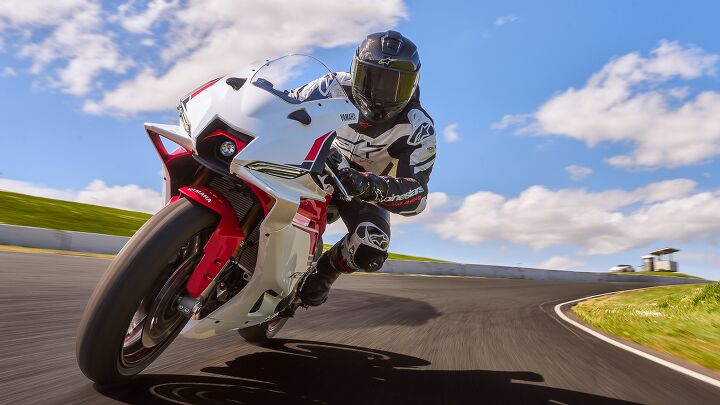
Congratulations. You’ve made the decision to go to a trackday (or even a race). We think that’s one of the best decisions you can make with your motorcycle. Not only is track riding fun and addictive, but it’s also a great environment to improve your skills. But there’s a lot to do to get ready, like getting all your gear in order. Most important, of course, is your helmet.
Do you have a proper track helmet? Generally speaking, a good helmet for the track is full-face, with a double D-ring closure, that meets or exceeds all federal safety guidelines. You’ll have to consult with your local track or track/race organization for the specific helmet regulations they require, but the following selections are helmets we know will easily pass any tech inspection held anywhere in the US of A, and probably the rest of the world, too. A really good track helmet will have all of that, along with a bigger eye port that lets you see ahead when you’re prone on the gas tank, as aerodynamic and light a shell as possible, and great venting so you can keep a cool head.
There are many reputable helmet manufacturers out there, going about the task of head protection in their own unique ways, and there’s no way for us to sample all of them. But the helmets presented here all come from manufacturers we’d trust with our heads. Hours upon hours of time, money, and resources go into the science of making helmets as effective as possible – not just from an impact perspective, but lately, some manufacturers have poured resources into minimizing the effects of brain rotation during a crash as well. Those resources don’t come for free, however, so if you’ve wondered why top-shelf helmets cost so much, it’s because innovation has a price.
Table of Contents
Why Trust Motorcycle.com?
At Motorcycle.com, our reputation as a trusted authority in the motorcycle world since 1994 is built on our deep expertise and commitment to quality. Our team, composed of seasoned riders and industry experts, brings a wealth of knowledge and experience to every review and product recommendation we offer. We understand that when it comes to motorcycles, parts, and accessories, the right choice can enhance both performance and safety.
Our extensive range of in-depth reviews and performance tests are more than just evaluations; they are insights born from years of hands-on experience and a thorough understanding of what riders truly need. We cover every aspect of motorcycling, from sport bikes and cruisers to adventure bikes and beyond, ensuring that our recommendations cater to every type of rider.
The trust placed in us by over 2 million enthusiasts monthly is a testament to the reliability and accuracy of our advice. Whether it's selecting a new bike, finding the best accessories, or choosing the right gear for your ride, Motorcycle.com is dedicated to providing advice you can trust, backed by decades of expertise in the motorcycling field.
1. Editor's Pick: 6D ATS-1R
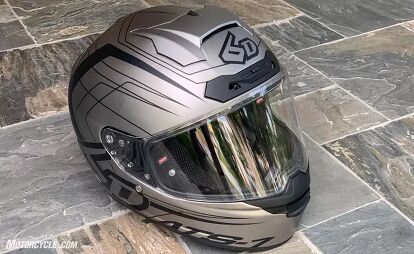
In our review of the 6D ATS-1R helmet, our editor embarked on a detailed exploration of its features, starting with an unexpected encounter at the WSBK weekend at Laguna Seca with Bob Weber, the CEO of 6D Helmets. This meeting led to the discovery of the latest iteration of the ATS-1 helmet, now upgraded and dubbed the ATS-1R. With an editor score of 92%, the helmet boasts high marks across aesthetics, protection, comfort, and innovation, including a perfect score in protection and innovation, highlighting its superior safety features.
The 6D ATS-1R introduces advancements in the Omni-Directional Suspension (ODS) system, a hallmark of 6D helmets, designed to enhance rotational brain injury protection through its unique dual-layer EPS construction. These improvements include a reduction in the number of isolation dampers from 29 to 10, contributing to a significant 200-gram weight reduction, making the helmet comparably light to other high-end models like those from Shoei and Arai.
Despite its larger outer shell size, the ATS-1R's innovative design facilitates exceptional ventilation and quietness, two features that our editor found particularly impressive. The helmet's ability to manage airflow efficiently, even in the hottest conditions, without sacrificing noise control, was a standout aspect of the experience. Furthermore, the ease of swapping visors and the snug, comfortable fit—despite an initial concern about sizing—were noted as highlights of the helmet's design and functionality.
Our editor's time with the ATS-1R revealed a helmet that excels in comfort for long rides, offers exceptional venting and quietness, and comes with premium features like a Pinlock visor and quick removal straps for the chin pads. Priced at $695 for solid colors and $745 for graphics, the 6D ATS-1R positions itself firmly in the premium helmet category, pushing the boundaries of head protection technology and offering riders a top-tier option that may well convert skeptics to fans.
2. AGV Pista GP R
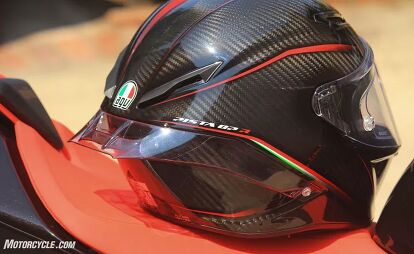
In our comprehensive review of the AGV Pista GP-R, our editor delves into the intricacies that set this helmet apart in the realm of premium motorcycle gear, particularly for track use. With a starting price point of $1,400, extending up to $1,600 for race replicas, it's positioned as one of the priciest options available, only surpassed by Arai's Corsair X RC. This review aims to unpack whether the investment aligns with the value it offers.
The AGV Pista GP-R distinguishes itself with a full carbon fiber shell, contributing to its lightweight profile, and it stands out for providing a dedicated EPS liner for each of its four shell sizes, catering to seven helmet sizes from XS to XXL. This attention to size-specific design ensures optimal fit and weight distribution across different head sizes. The helmet's aerodynamics, enhanced by Computational Fluid Dynamic simulations and wind-tunnel testing, boasts a 4% improvement over its predecessor, the Pista GP. This is partly due to a dual-plane rear spoiler aimed at reducing turbulence and maintaining stability at high speeds, even when the rider turns their head.
The Pista GP-R's ventilation system is notable for its efficiency, channeling air through the helmet with five front vents and ensuring a comfortable experience even in rigorous conditions. Additionally, its visor offers an exceptional 190º horizontal and 85º vertical field of view, crucial for peripheral vision on the track. The visor is also equipped with a double anti-fog coating and a Pinlock 120 insert, covering the entire viewable area for clear visibility.
Riding impressions highlight the helmet's remarkably light weight and snug fit, designed explicitly for track and race use rather than everyday street riding. The helmet's aerodynamics provide excellent stability at speed, and despite its effective ventilation, it's noted for being quite loud, a trait for which AGV provides earplugs.
The visor's locking system is designed for safety, minimizing the risk of accidental openings during a crash. However, it lacks detents, offering only open, partially locked, or fully closed positions, which could lead to wear over time if frequently slammed shut. The Pista GP-R also includes a hydration system for convenience on the track, though its integration may be cumbersome for some users.
Ultimately, the AGV Pista GP-R is presented as a top-tier helmet for serious track enthusiasts, developed with input from Valentino Rossi and reflecting the highest standards of racing gear. Its design, materials, and features justify its premium status and price, offering advanced protection and performance for dedicated racers. As the Pista GP R transitions to the newer RR model, it remains a benchmark in the racing helmet category, embodying AGV's commitment to safety, comfort, and performance at the highest levels of motorcycle racing.
3. Arai Corsair-X

Arai's steadfast approach to helmet design is highlighted in our review of the Corsair-X, underscoring the brand's commitment to safety beyond standard certification requirements. Brian Weston, Arai's Managing Director, emphasized during the Corsair-X presentation that mere compliance with minimal standards doesn't fully address the unpredictable nature of motorcycle crashes. Arai's philosophy centers on exceeding these minimum requirements, focusing on comprehensive protection that accounts for various impact scenarios, not just those outlined by standard tests. This approach is indicative of Arai's commitment to safety as its paramount concern.
The Corsair-X's design features, including the R75 Shape principle, ensure that the helmet is as round as possible, minimizing the chances of the helmet catching on surfaces during a crash, thereby reducing rotational forces. This design ethos extends to the helmet's vents and diffusers, which are meant to "disappear" in an accident, further aligning with Arai's safety-first philosophy.
Arai's innovative use of a hard exterior shell, combined with a softer, multi-density foam liner, demonstrates a thoughtful approach to force distribution and absorption during impacts. This construction not only enhances the helmet's protective capabilities but also increases wearer comfort, a crucial factor during extended use. The Corsair-X also proudly incorporates features aimed at enhancing rider convenience and comfort, such as the VAS (Variable Axis System) for easier visor changes and a more intuitive shield locking mechanism inspired by Arai's Formula 1 helmet technology.
The track day testing of the Corsair-X at Thunder Hill Raceway provided practical insights into the helmet's performance, particularly highlighting its effective ventilation system, noise reduction efforts, and the overall stability at high speeds. The helmet's design facilitates a snug fit that becomes almost unnoticeable when riding, allowing the rider to focus entirely on the experience rather than being distracted by discomfort or instability.
Arai's Corsair-X not only adheres to the brand's long-standing commitment to safety and quality but also introduces meaningful innovations that reflect direct feedback from the riding community. While premium priced, the Corsair-X's meticulous design, safety features, and comfort enhancements justify the investment for serious riders who prioritize helmet performance and protection on both track and street.
In summary, the Corsair-X exemplifies Arai's philosophy of relentless refinement and a safety-above-all approach to helmet design. It is a testament to Arai's dedication to advancing helmet technology with rider safety and comfort at the forefront, reinforcing the brand's position as a leader in premium motorcycle helmet manufacturing. Senior Editor's note: The Arai Corsair-X has countless graphics and color options.
4. Shoei X-Fifteen
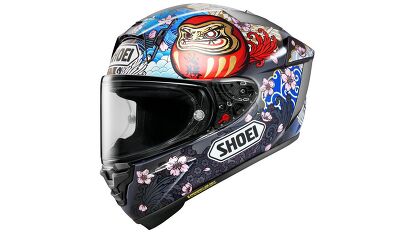
The Shoei X-Fifteen the Japanese brand's top-tier racing-focused helmet designed with the help of Marc Marquez. Building on the aerodynamic advantages first developed with the prior-generation X-Fourteen, the X-15's AIM+ multi-ply fiberglass shell was refined in a wind tunnel to reduce drag by about six percent and lift by 1.6 percent, providing stability at high speeds and during aggressive lean angles. According to Senior Editor Nic de Sena, it's one of the most stable helmets he's ever used. In fact, check out his full Shoei X-Fifteen review.
Ventilation is a standout feature, with seven adjustable intake vents and six exhaust ports channeling air through deeper EPS passages. The cheek pads also incorporate direct ventilation, improving airflow and cooling during both track sessions and long road rides.
Visibility is enhanced by the CWR-F2R shield, which provides a larger field of vision, distortion-free optics, and a dual-stage locking system that ensures a secure seal at speed. Shoei integrates vortex generators at the shield’s edge to reduce wind noise while maintaining clarity and focus.
Interior comfort comes from the 3D Max-Dry Custom Interior System II, which uses moisture-wicking materials and a modular design. The split center pad allows targeted adjustments, and cheek pads that are 16 percent larger hold the helmet firmly in place while minimizing movement. All components are removable and washable, adding to long-term usability. The helmet can be adjusted for both "street" and "race" positions to allow more upward peripheral vision, depending on your preferences.
Sizing ranges from XS to XXL, with precise head circumference measurements to guide fit, though this helmet is designed with an intermediate oval head shape for the North American market. Per the usual for Shoei helmets, the build quality stands out among some of the best and in league with fellow Japanese helmet maker, Arai. Our medium helmet’s 3 lbs. 13 oz. is offset by balanced aerodynamics and reduced buffeting, which lessens neck strain over extended use. The result is a helmet that combines track-level performance with practical comfort, making it a versatile choice for riders seeking both safety certifications and refined usability. As expected, several graphics and color options are offered.
5. HJC RPHA 1N
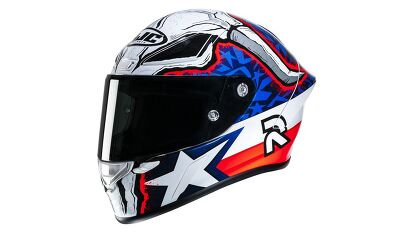
The HJC RPHA 1N helmet brings MotoGP and World Superbike-level performance to average riders like you and me. Constructed out of a lightweight PIM-Plus shell incorporates carbon and carbon-glass hybrid materials crafted through wind-tunnel testing to deliver a lightweight but rigid structure that balances aerodynamic efficiency with strength. As it stands, the RPHA 1N give the Shoei X-15 and the Alpinestars Supertech R10 helmets are run for their money in the aerodynamics department. An additional rear spoiler can also be added to enhance aero and multiple vents that help direct airflow and manage heat during aggressive riding.
Ventilation performance is impressive, thanks to HJC’s Advanced Channeling Ventilation System (ACS), featuring five intake vents and four exhaust outlets that channel air through internal EPS pathways to rapidly dissipate heat. The sweat-wicking Silvercool interior lining is antibacterial, removable, washable, and includes glasses grooves and speaker pockets, supporting long-term comfort and communication setups. Senior Editor Nic de Sena noted that his thick-framed glasses don’t cause any pressure points, which can happen on tight, race-fit helmets.
The helmet includes a Pinlock-ready, anti-scratch HJ-35 shield with a double-locking mechanism, UV protection, and provisions for tear-off posts and fog reduction. A quick, tool-less cheek-pad removal emergency system and a traditional D-ring strap further reinforce its race-oriented usability.
Coming in a little heavier at 3 lbs. 33 oz. than the Shoei, the HJC RHPA 1N still achieves excellent weight distribution, while also minimizing fatigue despite its performance-focused build. It carries FIM homologation along with DOT and ECE 22.06 certifications, placing it firmly among high-specification protective helmets.
Sizing options span from 2XS to 2XL to accommodate a range of head shapes, though its intermediate oval profile may feel snug for some. Fit can be adjusted, though you’ll want to work with an authorized and qualified retailer. The helmet includes practical accessories such as a breath deflector, chin curtain, Pinlock lens, tear-offs, and an aero spoiler in the package, enhancing both fit and function for track and street riders. The HJC RPHA 1N also impresses with excellent build quality. As always, many graphics and color options are available.
6. Alpinestars Supertech R10
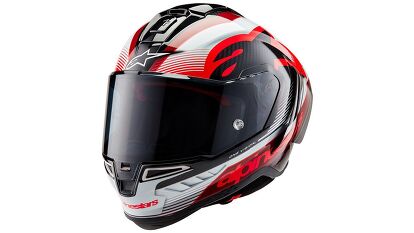
The Alpinestars Supertech R10 Carbon lives up to its name in a few ways and is the latest entry into the street helmets from household name, Alpinestars. The shell utilizes a 3K high-density and fiberglass construction to help mitigate main impacts while also keeping weight at a minimum. In Road Test Editor Troy Siahaan’s review of the Supertech R10, he noted this this medium helmet tipped the scales at 3 lbs. 4 oz., which is actually heavier than some of the other options here.
However, it makes up for that additional weight by being one of the most aerodynamically sound helmets that we’ve used to date. Senior Editor Nic de Sena notes, “having worn this helmet on the street, track, and while riding both fully faired and naked motorcycles, it remains far more stable in the wind than most helmets I’ve used to date. It cuts through the air without creating lift like what you might experience with other helmets.”
Ventilation stems from an eleven-point airflow system, including seven intakes and four exhausts integrated into the shell with inner EPS channels. Front chin and top sliders direct cool air efficiently, while rear extractors efficiently evacuate heat. Overall, ventilation is a strong point for the Astars lid and can help. The face shield spans 220 degrees laterally and 57 degrees vertically, featuring an optical class 1 quick-release visor, anti-scratch and anti-fog treatment, robust metal locking, and compatibility with Pinlock anti-fog and tear-offs.
Internal comfort is ensured through an eight-piece, multi-density EPS liner that manages both linear and oblique impacts, aided by a smooth low-friction interface. The patented "A-Head" fitment system allows personal adjustment of helmet height and angle. Linings are removable, washable, and antimicrobial, with emergency cheek pad removal and hydration tube channels adding usability. Riders that wear glasses will find the ultra-snug race-fit to be challenging when using thick-framed glasses, which can create pressure points. Buyers can anticipate an intermediate oval head shape.
Sizing spans from XS through 2XL across four shell sizes. The helmet features a collarbone relief chin bar and arrives with clear and dark shields, a breath deflector, chin curtain, and standard spoiler. In use, it delivers track-level aerodynamic performance and ventilation with a firm, race-oriented fit and excellent peripheral vision. Alpinestars offers several limited-edition graphics and colorways.
FAQs
What to look for in motorcycle racing helmets?
The two primary things to look for in a racing helmet are:
- A DOT, SNELL, ECE, or FIM safety rating
- Proper fit
There’s a lot of controversy regarding the merit of different safety ratings, including DOT and SNELL, but those are topics for another discussion. If you plan on taking your motorcycle to the track, whether for racing or trackdays, one of these safety ratings on your helmet will be required (at least; check with the specific organization you plan to ride with for their requirements).
Even if you don’t plan on going to the track, safety ratings mean the helmet should provide a minimum level of safety should you land on your head. Decorative helmets (aka helmets without any sort of rating) are not tested to any standard and won’t protect you at all and are nothing more than, well, decoration.
A proper fit is important because no matter how many features and components a helmet has, if the helmet is uncomfortable on your head, you’re not going to wear it. The same goes for any piece of safety gear.
Are race car helmets the same as motorcycle race helmets?
No. There are several differences between car helmets and motorcycle helmets. For starters, motorcycle helmets tend to feature more robust ventilation channels since you’re exposed to the elements more so than even an open cockpit car. Eye ports on motorcycle helmets tend to be much larger as well. Some car helmets also have mounting points for neck restraints (HANS devices) that motorcycle helmets don’t.
A big difference between car helmets and motorcycle helmets is how each accounts for the dynamics that occur during a crash. In a car, the driver is strapped into the seat and there’s usually a roll bar and/or cage surrounding them. Because the driver’s position is basically fixed, their head/helmet will make impact with the same spot(s) continuously in a crash. So the helmet needs to be able to withstand those repeated hits (this is a big criterion in the SNELL test). Because a motorcycle rider gets ejected from the bike in a crash, it’s extremely unlikely the rider’s helmet will make impact with the same spot twice. If it does, it will be with a lot less force. The ECE rating takes into account rotational energy and dispersing impact forces as part of its certification process.
What helmet do motorcycle racers use?
All of the helmet companies you see above have professional racers wearing their helmets. While we can’t speak for every company, many of the helmets you see racers wearing are the exact same helmets you and I can buy on the shelf. Arai is a good example of this. Arai is proud to promote the fact the helmets you see on its professional racers are the same as the ones sold in stores – because it doesn’t matter who you are, head protection shouldn’t be biased.
Recent Updates
- August 22, 2025: Updated broken links. Added HJC RPHA 1N, Shoei X-Fifteen, and Alpinestars Supertech R10.
- March 29, 2024: For a better shopping evaluation, we have decided to reduce our list of recommendations to three. Also, we have updated our recommendations based on our editors' long-term testing and evaluations.
- September, 2021: FAQ, Additional Resources, and Recent Updates added, removed out of stock helmet.
Additional Resources
- In Gear: Shoei X-Fifteen Helmet Review
- MO Tested: Alpinestars Supertech R10
- MO Tested: 6D ATS-1R Helmet Review
- MO Tested: Arai Corsair-X Review
- MO Tested: AGV Pista GP R Review
- MO Tested: Bell Race Star Flex Helmet Review
- HJC RPHA 11 PRO Helmet Review
- MO Tested: Shoei X-Fourteen Review
- MO Tested: Shoei RF-1400 Helmet Review
- Best Motorcycle Racing Gloves
- Best Motorcycle Racing Tires You Can Also Use On The Street
We are committed to finding, researching, and recommending the best products. We earn commissions from purchases you make using the retail links in our product reviews. Learn more about how this works.
Become a Motorcycle.com insider. Get the latest motorcycle news first by subscribing to our newsletter here.
Troy's been riding motorcycles and writing about them since 2006, getting his start at Rider Magazine. From there, he moved to Sport Rider Magazine before finally landing at Motorcycle.com in 2011. A lifelong gearhead who didn't fully immerse himself in motorcycles until his teenage years, Troy's interests have always been in technology, performance, and going fast. Naturally, racing was the perfect avenue to combine all three. Troy has been racing nearly as long as he's been riding and has competed at the AMA national level. He's also won multiple club races throughout the country, culminating in a Utah Sport Bike Association championship in 2011. He has been invited as a guest instructor for the Yamaha Champions Riding School, and when he's not out riding, he's either wrenching on bikes or watching MotoGP.
More by Troy Siahaan





Comments
Join the conversation
Not that I'm in the market (those days are long past), but I'd also take a hard look at what Scorpion has to offer. In most cases, for about 1/3 the price of the ones you've listed you can buy a great quality piece. Heck, buy two and have money left over.
I bought my first helmet in 1968. The first thing I always look for is the SNELL sticker.