


Five Takeaways from Harley-Davidson’s Q3 2025 Results

Artie Starrs makes his public debut

Harley-Davidson’s financial results for the third quarter of 2025 was a pretty mixed bag. On the positive side, revenue from motorcycle sales increased 23% over the same quarter of 2024, and Harley-Davidson’s reported earnings per share of $3.10 exceeded expectations.
On the other hand, retail motorcycle sales of 34,000 bikes was down 6% from the 36.2% reported in Q3 2024. Despite the revenue growth from motorcycle sales, Harley-Davidson reported a 3.7% drop in gross margin due to unfavorable currency effects and tariffs.
The higher than expected earnings per share also came from a one-time boost from reduced credit losses as part of a now concluded transaction with Harley-Davidson Financial Services (which we’ll go into more detail about below.) Those effects won’t have any impact on future results.
Though retail sales were down, Harley-Davidson reported the revamped 2025 Softail lineup saw a 9% growth in the U.S. market, helping increase market share in the large cruiser category from 61% to 68%. The new Pan America ST also contributed to a 4% increase in Harley-Davidson’s adventure bike sales, while a price cut to the Nightster helped the Revolution Max model move off dealer floors.
Overall, Harley-Davidson reported a net income of $375.2 million in the quarter, compared to $116.0 million in the same quarter last year.
Beyond the numbers, however, there were five interesting details from Harley-Davidson’s presentation that caught our attention.
Meet the New Guy

The Q3 presentation marked the first public remarks from Artie Starrs since taking over the reins from Jochen Zeitz on October 1, 2025. Up until now, Starrs has met with dealers and other stakeholders, and spoke recently at the global dealer meeting, but this marks his first public address as CEO.
Starrs seems to be saying all the right things, admitting to being new to motorcycling (only earning his license this year) and seems to be bringing in a newcomer’s perspective to Harley-Davidson. Starrs says he was “blown away by the incredible camaraderie that surrounds the brand.”
Some might argue a role this high-profile needs someone with extensive industry experience, while others would counter that a fresh perspective might be what Harley-Davidson needs. For all the criticisms Zeitz received, often dismissed as being a shoe guy being put in charge of a motorcycle company, we must remember he joined Harley-Davidson’s board of directors in 2007, long before being appointed CEO in 2020. That’s 13 years working at the board level at Harley-Davidson when he became CEO, and 18 years in total when he left at the end of September. A lot of people still don’t embrace Zeitz as a Harley guy, but it’s disingenuous to dismiss him as an outsider, especially in comparison to Starrs.
In many ways, Starrs being a newcomer mirrors Harley-Davidson’s goal of attracting new riders to the brand. Speaking as a newbie himself — though at 48, not necessarily what you would call a “younger rider” — Starrs noted that Harley-Davidson seems to take itself a little too seriously at times and is missing some of the playfulness in the post-AMF era in the ’80s.
“Young people are looking for something that's fun and maybe has seriousness to it, but maybe not as serious as we're currently presenting it,” says Starrs. “And the legacy, if you look back at the 30, 40, 50 years of advertising that we put out, and I had Bill Davidson do this for me recently, and he sent me a reel, which is just unbelievably inspiring. When we were attracting young riders, there was immense joy. There was a tongue-in-cheek attitude. There was a playfulness in the work. And you can expect some of that to come back.”
HDFS Transaction

At the end of July, Harley-Davidson announced it was selling a small stake in its Financial Services business to investment companies Kohlberg Kravis Roberts & Co. (KKR), and Pacific Investment Management Company (PIMCO) along with several billions in existing loans and two-thirds of future loans. Harley-Davidson officially signed and completed agreements with KKR and PIMCO on October 30, While this transaction technically did not fall in Q3, it did have an effect on the bottom line, as a $301 million provision in credit losses due to $4.1 billion in loans being classified as held for sale.
The HDFS transaction is expected to unlock $1.2 to $1.25 billion in discretionary cash through Q1 of 2026. Approximately $450 million will be used to reduce the company’s debt load, and another $200 million will be used to repurchase its own stock. That still leaves about $550 million that can be used for other purposes which Harley-Davidson says will be detailed in the spring.
Moving forward, HDFS will operate as a capital-light company, with PIMCO and KKR shouldering much of the financial risk while paying HDFS a surcharge on future loans.
“A healthy Harley depends on a healthy dealer network”

We referenced it briefly above, but a big part of Starrs’ first month as CEO involved speaking with members of its dealer network, both at their individual locations, and at the annual dealer meeting. Starrs says he is making it a priority to strengthen the dealer network.
“A healthy Harley depends on a healthy dealer network, and right now, we have work to do to strengthen that foundation, starting with dealer profitability” says Starrs. “I've already made some quick decisions aimed at supporting the network in the immediate term.”
Those immediate steps include helping to reduce the overall inventory levels at dealerships, and achieving a better balance of products, with Starrs specifically pointed at reducing touring and CVO inventories. Starrs also says Harley-Davidson will start introducing customer-facing promotions to help drive foot traffic to dealerships.
Harley-Davidson will also work with its U.S. Dealer Advisory Council to discuss a more balanced approach to e-commerce. While customers benefited from direct access to parts and accessories online, e-commerce revenues went directly to Harley-Davidson. Dealers felt the hit, as online sales cut them out of the picture.

Starrs also addressed Harley-Davidson’s Fuel Facility program, which pushed for pricey renovations to dealerships to create a modern, uniform retail experience to customers. Starrs says the company will review its Fuel Facility guidelines and suspend penalties for non-compliance for 12 months.
2026 will be a key year for LiveWire

LiveWire showed signs of improvement during Q3, with electric motorcycle unit sales increasing 86% compared to the same quarter of 2024. Of course, that’s relatively easy to achieve when you’re only going from selling 99 bikes to 184. Aggressive price cuts to S2 models played a significant role in the higher numbers, as Q3 2025 motorcycle sales revenue dropped to $1 million from $1.2 million.
On the plus side, STACYC balance bike sales also saw a 69% increase in unit sales, with revenue increasing to $4.7 million compared to $3.2 million from the same quarter last year.
Overall, LiveWire reported $5.7 million third quarter revenue, a 28% increase from the $4.4 million reported in 2024. LiveWire reduced its net loss to $19.4 million from $22.7 million, thanks to its focus on cost savings.
Looking at the bigger picture, LiveWire continues to operate at a loss, but the red numbers continue to shrink with every quarter. The problem is the losses aren’t shrinking fast enough.

That’s why 2026 may turn out to be a significant year for LiveWire. At EICMA, LiveWire showcased its new S4 Honcho Street and Trail models. Production is expected to begin in spring 2026, adding two more affordable models to LiveWire’s lineup. A new maxi-scooter based on the S2 platform is expected to follow later in the year.
How these new models do will influence LiveWire’s immediate future.
Harley-Davidson’s 2026 roll-out

In the last few years, Harley-Davidson announced its carry-over models in either December or January, with new and updated models to follow shortly after. Previously, Harley-Davidson announced its lineup around September.
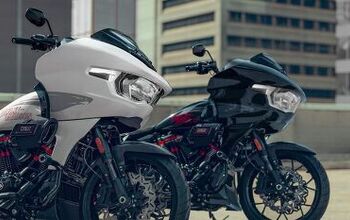
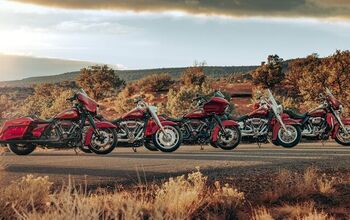
Last week, Harley-Davidson announced its carry-over 2026 models, the bikes returning with minimal changes beyond new paint options. This initial batch of 2026 models were timed for the day before its Q3 results were released, but also the day before EICMA, bringing Harley-Davidson in line with most of the motorcycle industry in announcing models around the beginning of November.
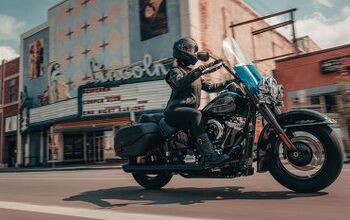
The announced 2026 models include Harley-Davidson’s recently updated Softail range plus its Revolution Max models and the Street Glide and Road Glide models using its modern touring platform. The only change of note for these returning models is the addition of a Solo Trim Package for the Heritage Classic, Street Bob, and Street Glide.

The Solo Trim Package equips these models with a solo seat, basic cast aluminum wheels, and the standard Dark Billiard Gray paint option, reducing the overall price by $2,000 for the Street Glide and Heritage Classic, and by $1,000 for the Street Bob. Essentially, this creates three entry-level trims to existing models, but along with the Nightster, positions four Harley-Davidson models at four psychologically significant price barriers:
- Nightster: starts at $9,999
- Street Bob: starts at $14,999
- Heritage Classic: starts at $19,999
- Street Glide: starts at $24,999
These models will be joined by a new Sprint model, which is now slotted to debut in the second half of 2026 with a sub-$6,000 price point.
Become a Motorcycle.com insider. Get the latest motorcycle news first by subscribing to our newsletter here.
Dennis has been a part of the Motorcycle.com team since 2008, and through his tenure, has developed a firm grasp of industry trends, and a solid sense of what's to come. A bloodhound when it comes to tracking information on new motorcycles, if there's a new model on the horizon, you'll probably hear about it from him first.
More by Dennis Chung





Comments
Join the conversation
OK you don't like the goberment but I think your answer is facile because that other bikes having cat's don't run anywhere near as hot. The Panamerica is a break with the traditional HD platform. Where the traditional is marketed on a look and feel which makes it harder to introduce new design changes i.e. making the engines liquid cooled or moving or shielding the exhaust pipes. That said it is a difficult problem for HD to modify their traditional bikes and they have done an admirable job in comparison to Indian air cooled bikes. ( I owned a Chieftain that was so much hotter than my Ultra Limited) But we aren't discussing the traditional HD market. The Panamerica on the other hand is an attempt to appeal to a different market so looking at its competitors you can see that quite a number of them have addressed heat management successfully. HD should do the same for this market. My GW, Concour and 1200 RT were great bikes that provided incredible protection from the elements and did not cook the rider when it got hot outside. The 2010 Concour I had was the absolute best in this regard. The Panamerica is a great bike but could be better. As to cat's being useless, your wrong there as well. NO2 levels are markedly lower due to their implementation.
That's because the XR1200 was a poorly executed motorcycle; that's why no one bought it. It wasn't because the concept was bad.