


Proper Cornering Technique
Love complex topics steeped in theory and opinion? Let’s talk cornering!
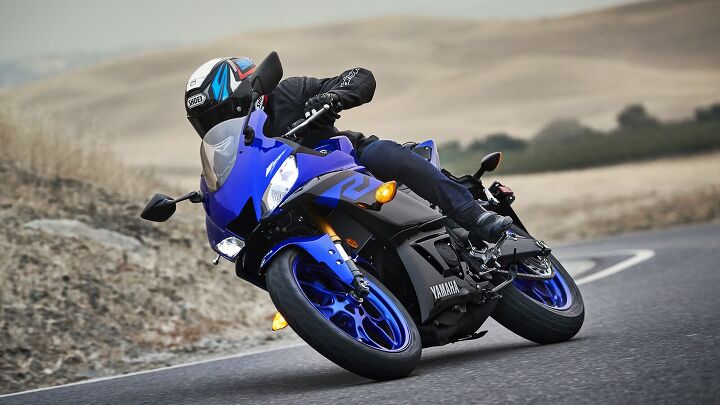
Want to see some feathers fly? Sit down with a bunch of biker friends and ask their opinion of proper cornering technique. That fox-in-the-henhouse moment will probably jumpstart a flurry of opinions – some well-considered theory, others emphatically proven by deeds on the racetrack, and others downright dorky. Here are some cornering technique suggestions for learning riders.
Motorcycle.com thanks Yamaha for sponsoring this new rider series.
Brake First
To simplify learning to corner well on your motorcycle, simplify the process by getting your braking done before you enter the turns. (Expanding your skill set to include more advanced techniques, such as trail braking, are covered in “How To: Motorcycle Braking,” a future installment in this series, and can be explored once you’ve mastered the basics.) Brake reasonably and calmly, smoothly release the brakes before you enter the corner, and then turn smoothly in.
Always be Smooth
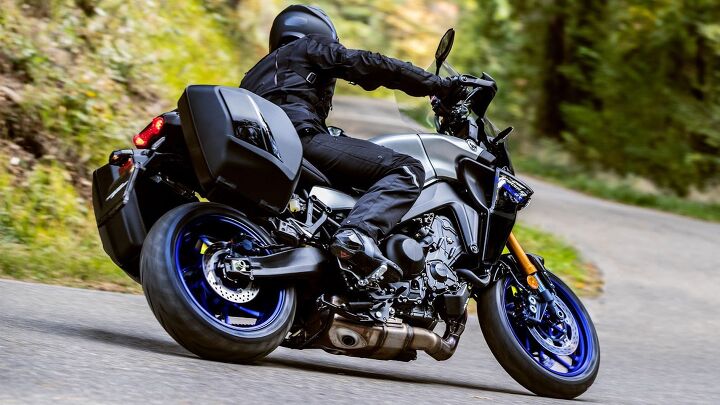
For best cornering, always be smooth with the handlebar inputs, the throttle, and any brake activity. Years ago, Ford famously gave F1 champ Jackie Stewart a production car outfitted with a dish containing a loose ball, all mounted on the hood. His “formula finesse test” on a figure-8 course demonstrated that by driving smoothly, it’s possible to accelerate, brake and corner without the ball rolling out. This lesson in finesse applies to bikes too.
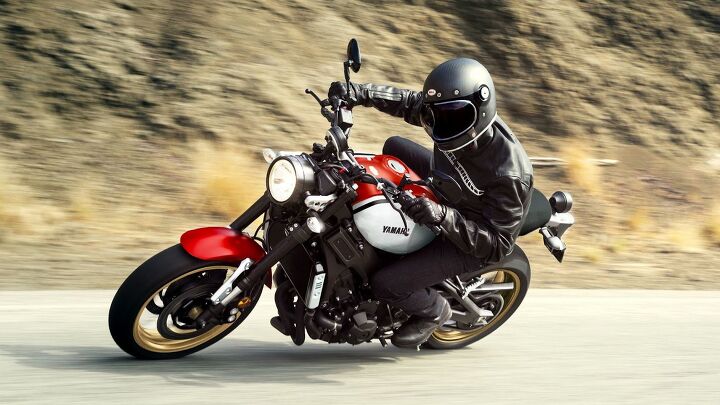
The lesson here is simple: Smoothness breeds cornering success. Mastering this helps keep the weight evenly balanced on your tires, keeps the bike’s steering steady, maintains consistent ground clearance under the exhausts and foot pegs, and makes maintaining your cornering line easier. Also, smooth is calm, and calm is good for the pilot.
Keep your Speed Reasonable
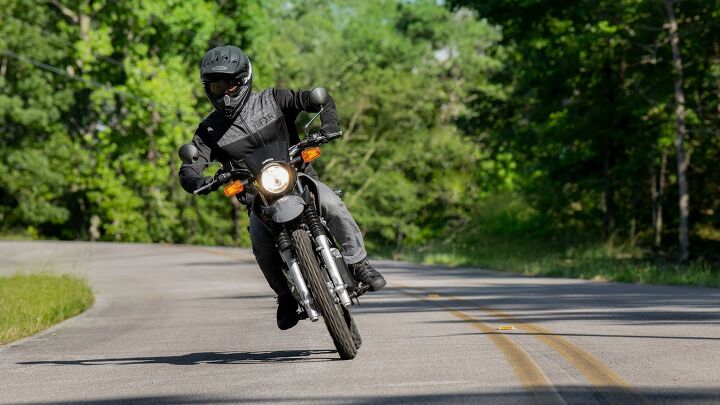
People love to go fast. Otherwise, why would Ohio’s Top Thrill Dragster rollercoaster exist? If that appeals to you and your bike, invest in good riding gear and training, get yourselves to a proper racetrack, and have at it; going wild on the streets is asking for trouble. So, how fast is reasonable and appropriate on public roads? The serious answer to this serious question is both obvious and bureaucratic: Every road has a speed limit, posted on signs and/or written into the state vehicle code. Above that, follow the basic speed law, which states that regardless of the speed limit, you must ride at a speed safe for conditions.
Look Through the Turn
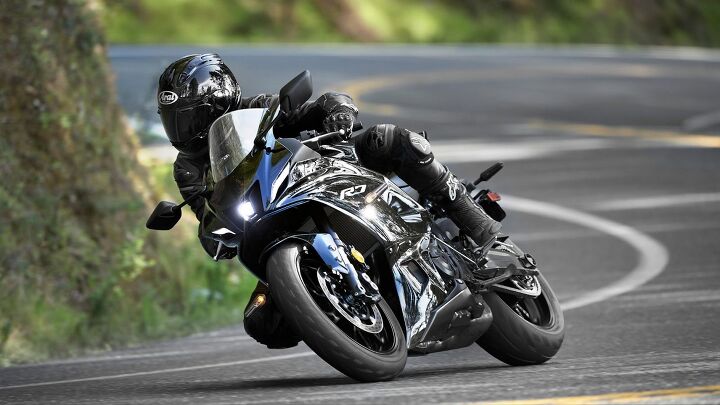
Whether you’re heaving a disc in Ultimate Frisbee, throwing a runner out at second, or sinking a 3-pointer in a game of hoops, you need to send it where you want it to go. Same for motorcycle cornering, except that you’re along for the ride. It’s an old axiom that riders go where they’re looking, so even if there’s a portion of truth here, it pays to look into and through every corner to assess, determine, and then execute your trajectory. The farther you can see, the more information you can infer about the turn.
If the corner looks like a constant radius, you can generally expect to maintain a constant speed. If the corner appears to “open up” (i.e., an “increasing radius” turn), you can generally expect to be able to accelerate through the turn. And conversely, if the corner appears to “close up” (i.e., a “decreasing radius” turn), you may need to slow down to stay in your lane and complete the turn.
A Cornering Trick
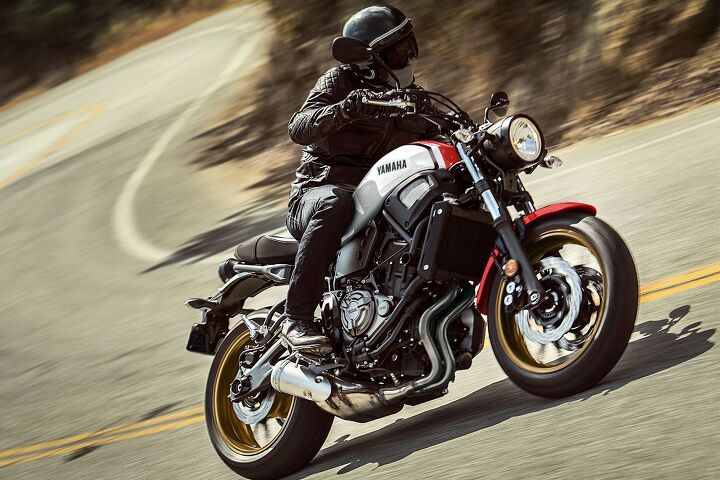
There is a tactic that veteran riders often use to help assess corners as they approach them, particularly useful on roads with lines defining the edges of the pavement. As you’re approaching a turn, notice the two lines:
- If they appear to diverge as they progress around the corner, that indicates an increasing-radius turn.
- If the gap between the lines appear to stay constant, that indicates a constant radius turn.
- If they appear to converge as they progress around the corner, that indicates a decreasing-radius turn.
Caveat: We expect that by nature, road engineers favor and pursue building logical and predictable corners. But there’s no guarantee that what you see initially will define the entire corner! When in doubt, go slow until you can see which way the road goes.
Choose Your Apex
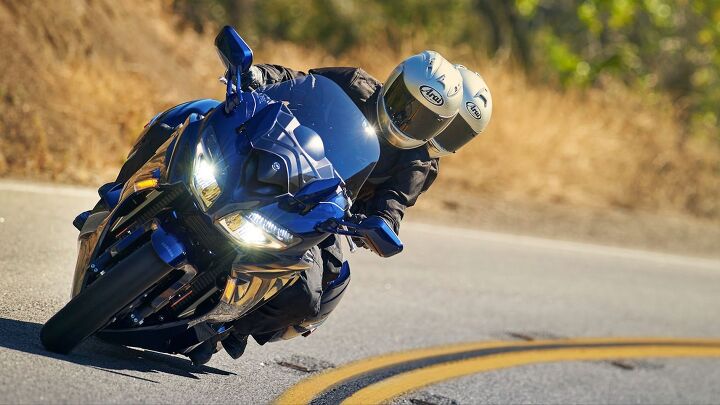
Cornering lines and apexes are as old as bodies in motion, and innate to living things. For proof, watch any dog chase a cat around the yard; they know how speed, radiuses, and apexes relate innately. But wait, back to motorcycling! Riding instructors universally discuss cornering lines and apexes, with track instructors focusing on how to carry the most speed through the turns. This isn’t the goal for new street riders; rather, the goal is safety.
Two scenarios to consider here:
- When you approach a corner from the inside of the lane, you will naturally apex early (i.e., reach the inside of the corner immediately). If you are carrying a lot of speed, this means your trajectory may widen as you progress through the corner, sending you toward the edge of the road or the opposite lane. Not preferred!
- A better street strategy, from our experience, is to approach the corner from near the outside of the lane, and delay turning in slightly. This carries you and your bike through the corner in the middle of the lane and results in a late apex (i.e., reaching the inside of the corner later). The advantage here is that if you are traveling faster than you should, you have relatively more pavement available, later in the turn. Your line of sight into the opposing lane is also better throughout the turn, allowing more time to see and react to oncoming cars, as needed.
Study the Surface
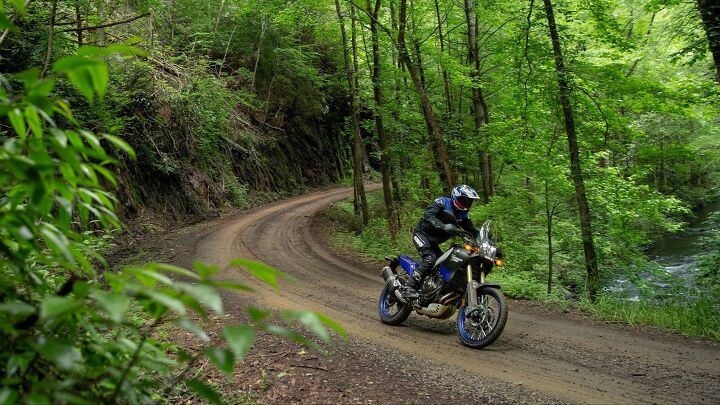
Instead of taking road surfaces for granted, study them while you’re riding. This applies to corners, too, especially blind turns that may hide dirt, rocks, sand, water, potholes, pavement repairs or other surprises. A good riding surface is to your advantage, and having a heads-up attitude about finding it will pay dividends throughout your riding career. Happy cornering!
Become a Motorcycle.com insider. Get the latest motorcycle news first by subscribing to our newsletter here.

John L. Stein brings 30 years of both automotive and motorcycle experience, having written for AutoWeek, Car and Driver, Motor Trend, Sports Car International, Chevy Outdoors, Truck Trend, Cycle World, Motorcyclist, Adventure Travel, and Men’s Journal, just to name a few. His articles have been published in the US, England, Japan, Australia and France. His technical knowledge combined with his ability to understand and effectively communicate what a motorcycle is doing underneath him is an invaluable resource to the Motorcycle.com team.
More by John L. Stein








Comments
Join the conversation
DNE: That's a nice technique.
Another one is to put a piece of painter's tape on the lower edge of your visor. With the visor up, you can use that ½" of tape-shade to shield from sun. No need to put the arm up with that method.
Another one is to put the flip-up section of your flip-up helmet up and use that as a sun-shade. I know it's not "safe" but in a pinch, it's safer than not seeing where you're going. This works when facing the sun in slow traffic situations and also gives you a little more air. I don't do it often, but I will in the right conditions. You can't slog through traffic with your arm up all the time.
My helmet has a flip-down tinted visor. I wear sunglasses. When the sun is really in my face, I'll flip the visor down too. It helps but I still get some glare and shadow detail is not great with two tints going at the same time.
However, there was no glare in the example I gave. The sun was high, I wasn't facing the sun. It was bright everywhere but the corner was covered in a hard shadow from overhanging trees. I could see the curve, but not the surface. So far, I haven't found any way to see that...shadow detail was missing and the clump was in the shadow.
BTW: 1 year later, we were out in the same basic area, different road. We'd just come out of a great set of curves down in a valley, had climbed out and slowed down to around 50mph...fast enough for a cool wind, slow enough that we were chilling out and taking a breath after the gauntlet we'd just conquered. We had gone maybe 1000 yards on a relaxed straight section in open country. I was riding 2nd.
A full gown deer popped out of the ditch on the right full of high grass and directly into the center of our leader's path. 5 yards or less in front of his bike. It happened so fast I barely saw it and I was back 30 feet or so. It hit the leader's bike, a '21 BMW GS, before I saw it. OMG. No way to avoid. I don't think the ride leader ever even saw it. I barely did.
He did all the right things. Full brakes, eyes laser-straight and brought the bike to a controlled stop in the road, whereupon the deer flopped off the front of his bike, It hobbled quickly into the ditch and passed on within a minute. Our lead rider was not injured and didn't even drop his bike. He had a bit deer do-do on his right boot and a bit on the right side of the bike. His bike would run but had to be towed home due to a leaking radiator/cooling system. He was able to limp it to a safe place and park it.
He managed to get it to his home dealer later that week and is back riding the bike this year. Has new plastic, new radiators (2) and other plastic bits that lurk under the front. He had several other bikes to hold him over while he waited for repairs, which took months. BMW is not as quick at repairs as they used to be. He lives near Johnson City, TN and has been riding those glorious hills for decades...He's truly a great rider.
No one could have avoided that hit. No one I know could have had survived a hit like that with so little drama. I learned some stuff that day that I won't forget anytime soon. Oh, and we were all giving each other enough interval so no one hit anyone else during the ensuing surprise hard stop. Not a great afternoon, but certainly a great recovery from a potentially terrible afternoon.
Late apex almost always while riding the street. The only time I use a "race line", is a left hander when I can clearly see all the way through the turn. Also I get all of my braking done before the turn and then on the throttle as soon as I can see the corner open. Cornering is what makes motorcycle riding fun.