


Best Motorcycle Racing Tires You Can Also Use On The Street

The stickiest rubber short of a slick
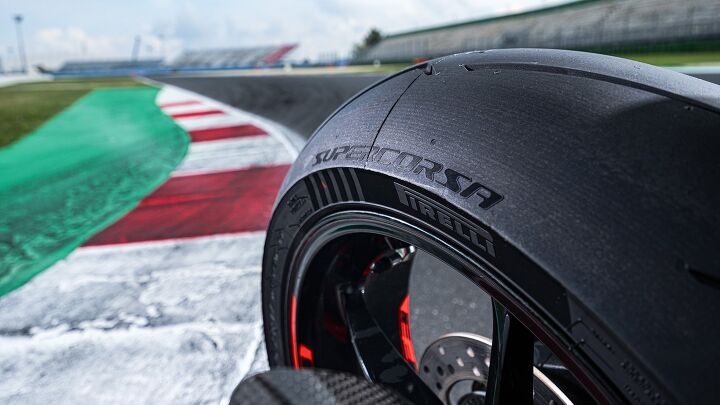
In our Best Sportbike Tire series, we compiled a list of sportbike tires primarily suited for spirited street riding. In this, our Best Motorcycle Racing Tires series, we’re catering to the hardcore track rider, or even club racer, who still fancies the odd street ride. If you fall in that category, this list is for you. Here we’ve compiled some of the best track rubber you can find while still being approved by the Department of Transportation. In case you didn’t get the subtle hint, you won’t find any slicks on this list, but what we have here are nearly as good. As with many things in life, there’s a catch – some of these tires you’ll have to get through your local track vendor and can’t necessarily buy online. To put a positive spin on this scenario, at least you can feel good knowing you’re supporting a local business. Better still, your local track vendor will have the best advice as to what tire pressures to set for your local riding areas. Where possible, we’ve linked to Motorcycle.com staff member reviews of said tire(s), so here they are.
Table of Contents
Editor's Pick: Pirelli Diablo Supercorsa SP V4

The Pirelli Diablo Supercorsa SP V4 tires represent the pinnacle of Pirelli's commitment to bringing track-level performance to the street, embodying the brand's philosophy of "we sell what we race, we race what we sell." Seeing as they're the spec-tire manufacturer for the World Superbike Championship and just recently announced that they'll become the spec-tire manufacturer in the MotoGP championship beginning in 2027, Pirelli can make those claims and actually mean them.
The fourth-generation Supercorsa SP iteration has undergone a comprehensive redesign, drawing directly from Pirelli's extensive experience in the FIM Superbike World Championship. One of the standout features is the innovative 'Flash' tread pattern, which optimizes water evacuation and ensures a consistent contact patch at various lean angles, enhancing both grip and rider confidence. The aggressive profiles mirror that of Pirelli's Diablo Superbike racing slicks, facilitating rapid direction changes and offering exceptional stability during high-speed cornering.
A notable advancement in the SP V4 is its dual-compound composition on both front and rear tires, with a racing compound on the shoulders and a slick road compound in the central band, delivering superior grip during aggressive cornering and improved longevity for everyday riding. More importantly, the wet grip achieved by the SP V4 is exponentially better than any previous generation, which were not confidence inspiring in wet or mixed conditions; that's all changed for the V4's updated multi-compound rubber. Compared to its predecessor, the V3, the SP V4 boasts a refined structure with wider section structural cords composed of numerous interwoven textile filaments, resulting in enhanced rigidity and better shock absorption. This meticulous engineering ensures that riders experience unparalleled performance, whether navigating mountain passes or pushing limits on the track.
Continental Race Attack 2

The Continental Race Attack 2 is built for riders who want race-level performance in a road-legal tire. Using Continental’s Black Chili compound, the Conti Race Attack 2 delivers impressive grip in both dry and wet conditions, while the nearly slick shoulders maximize contact at full lean. It feels planted mid-corner and offers predictable feedback when you’re pushing hard, whether on twisty backroads or at a track day.
The front tire is tuned for stability under heavy braking and provides quick turn-in, while the rear uses Continental’s MultiGrip technology to balance straight-line stability with confidence at lean. In fact, the reason Continental is on this list as opposed to other competitors is because it uses a much stiffer carcass design than some of the tires listed here and some riders may prefer that trait. The result is a tire that gives a stable, communicative feel that inspires trust when riding aggressively.
Born from the brand’s racing development, the Race Attack 2 is also compatible with tire warmers and performs well at lower pressures, which makes it suitable for trackday use, too. Consistency is a major selling point with the Race Attack 2 as its grip doesn't "fall off" as dramatically as the tire wears. However, we should note that high-performance tires fit for racetrack use will offer far less mileage than less sporty tires, due to their softer, grippier rubber compounds.
If you're in the market for a high-performance tire that feels at home on both canyon runs and track sessions, the Race Attack 2 offers a rewarding balance of race-bred grip and real-world versatility. If you're wondering if the Black Chili compound actually has chili in it, then we're sorry to disappoint. That's just the German brand's proprietary name for any compound technology in its upper-echelon of performance.
Bridgestone Battlax Racing Street RS11
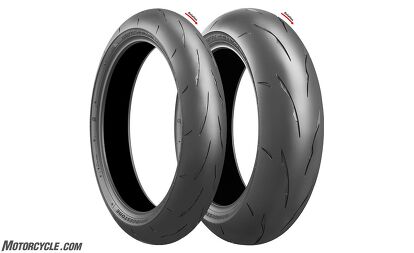
The Bridgestone Battlax Racing Street RS11 is the brand's top-tier high-performance hypersport street tire developed directly from racing technology. If you want more grip from a Bridgestone, then you'll be looking at the similarly named DOT-legal Bridgestone Battlax Racing R11 race tire, which is basically a racing slick with tread and it does require tire warmers to be used. While the R11 is street legal, we wouldn't recommend it for the road. The Bridgestone Battlax Racing Street RS11 is designed for rapid warmup times and doesn't require tire warmers at the racetrack. It's also the OE-fitment for a great many liter-class sportbikes like the Yamaha YZF-R1.
The front and rear tires utilize dual compounds with a harder center for braking stability and mileage, paired with softer shoulders for maximum cornering grip. The rear also incorporates a cap-and-base compound layout, combining a sticky surface layer with a firm underlying layer to maintain consistency as the tire wears.
The rear tire features Variable Mono Spiral Belt construction, typically reserved for pure race tires. This design increases tread stiffness and enlarges the contact patch, giving more grip when leaned while also reducing overall weight.
The tread pattern is derived from the track-only R11, engineered to disperse water efficiently while maintaining strong grip in wet conditions. Bridgestone’s Ultimate Eye Technology was used during development to analyze tire behavior at full lean and high speed, ensuring optimized pressure distribution across the contact patch. The rubber formulation incorporates fine carbon particles to improve road bite and enhance rider feel.
Unfortunately, Bridgestone has narrowed the available tire sizes for the RS11 with a single 120/70 front and two rear options; 200/55 and 190/55. However, the Bridgestone Battlax Hypersport S23 has a far wider selection of sizes that will fit lightweight, middleweight, and liter-class motorcycles. According to Bridgestone and our experience, the S23 does offer slightly less grip in a racetrack setting, yet it provides far better wet weather performance and outright mileage.
For riders demanding track-ready performance on public roads, the Battlax RS11 delivers precise feedback, stability during braking phases, and all the grip you'd hope for at lean.
Dunlop Q5

Trackday tires are all about facilitating fun and the Dunlop Sportmax Q5 tires are the latest to lend a helping hand by avoiding the use of paddock stands, tire warmers, or anything else that might get in the way of simply heading out to the racetrack and riding. Building upon the foundation of its predecessors, the Q5 introduces several enhancements aimed at improving handling, grip, and rider confidence that blows the Q4 out of the water.
A notable update is the all-new front profile, which is 2mm taller and 2mm narrower than previous models. This adjustment results in quicker turn-in rates and a larger contact patch at lean angles, especially under extreme conditions. Additionally, the taller profile contributes to increased vertical compliance, enhancing bump absorption during aggressive riding.
The Q5's compound has been refined to offer impressive grip levels without the necessity of tire warmers. During out tests, we experienced rapid warm-up times and consistent traction throughout our sessions. The front tire warms up quickly, providing immediate confidence and stability, even in truly frigid temperatures.
In terms of durability, the Q5 demonstrates reasonable wear characteristics. After multiple track days, the front tire shows minimal signs of wear, with ample life remaining for future use. However, the rear tire exhibits more noticeable wear, particularly on high-powered liter-class motorcycles. Shelving and visually unappealing wear can happen, but Road Test Editor Troy Siahaan ran these tires down to the chords just to show that while they still perform, even when not looking their best.
Overall, the Dunlop Sportmax Q5 tires offer a compelling option for track enthusiasts who desire high performance without the logistical challenges of tire warmers. Their quick warm-up times, enhanced handling, and substantial grip make them a worthy consideration for riders aiming to elevate their track experience. We've reviewed the Dunlop Sportmax Q5 and Q5S tires. Want our recommendation? Get the stickier Q5 front, while reaching for the stiffer Q5 S rear. You'll get better tire wear and mileage.
Metzeler Racetec RR K3

The Metzeler Racetec RR K3 tires strike an impressive balance between road and track performance, making them a solid choice for aggressive street riders and those who enjoy occasional track days. After putting a set through their paces, the first thing that stands out is their confidence-inspiring grip, even before reaching peak operating temperature. Unlike some hypersport tires that demand high heat to truly come alive, the Racetec RR K3 delivers predictable feedback right from the first few miles, making them more forgiving for street riding conditions.
Metzeler has refined the compound blend in this version, incorporating a dual-compound rear that improves longevity while maintaining the race-bred grip that defines the Racetec line. The front tire's single-compound design ensures consistent stability during heavy braking and aggressive lean angles, with a reassuringly planted feel even when trail braking deep into corners. One of the most noticeable improvements over its predecessors is the way these tires handle surface imperfections. Thanks to Metzeler’s refined carcass construction and Homogeneous Rubber Matrix technology, they provide exceptional compliance over less-than-perfect roads, minimizing chatter and allowing the bike to hold its line effortlessly.
On a dry, warm day, these tires feel almost telepathic, offering a smooth transition from upright to full lean, with no surprises mid-corner. Even when pushing hard, they don’t exhibit the nervousness that some ultra-sticky track tires can have when used on the street. While outright wet-weather performance isn’t their primary strength, they manage damp conditions better than expected, with the tread pattern effectively dispersing light water without feeling sketchy. Compared to their more aggressive K1 and K2 siblings, the K3s provide a more practical lifespan for street riders, without sacrificing too much outright performance.
For those who want a tire that bridges the gap between daily riding and spirited canyon carving — even track use — the Racetec RR K3 delivers. Editor-in-Chief, Ryan Adams recently put them to the test aboard the 2025 Triumph Speed Twin 1200 RS.
Michelin Power GP2

The Michelin Power GP2 tires represent a significant evolution in Michelin’s high-performance lineup, designed for riders who demand exceptional grip on the track without sacrificing road usability. Built using Michelin’s Adaptive Casing Technology+ (ACT+), these tires strike a perfect balance between stiffness for stability at high speeds and flexibility for improved compliance on rougher street surfaces. The refined 2CT+ (Two-Compound Technology) on the rear tire extends the wear-resistant compound further onto the shoulders, enhancing stability under hard acceleration and braking while maximizing grip at full lean.
One of the most impressive aspects of the Power GP2 is its near-instant warm-up, thanks to Michelin’s latest High Temperature Synthetic Elastomer compound. These deliver confidence-inspiring feedback almost immediately, making them more predictable and user-friendly for aggressive street riding. The revised Silica Rain Technology (SRT) in the central band enhances wet-weather grip, giving the Power GP2 a surprising level of capability in less-than-ideal conditions. While it’s still a tire that thrives in the dry, Michelin has made notable improvements in how it disperses water and maintains traction in damp environments.
On the track, the Power GP2 feels razor-sharp. The asymmetrical tread design, derived from Michelin’s MotoGP development, provides an increased contact patch at lean while efficiently channeling away debris. The combination of Michelin’s Racing Compound Technology (RCT) and the finely tuned carcass construction ensures stability under hard braking and aggressive throttle application. Compared to its predecessor, the revised compound blend offers even more lateral grip at extreme angles, allowing for higher entry and exit speeds without a loss of stability.
For riders who want an uncompromising blend of track-day aggression and real-world versatility, the Michelin Power GP2 delivers. It incorporates race-derived technology while remaining manageable for spirited canyon rides or daily commutes. Whether carving through technical switchbacks or pushing the limits on a circuit, these tires provide the kind of performance that keeps experienced you coming back for more. But, like all the tires on this list, your mileage may vary.
What is the best brand of motorcycle tires?
The good news is all the brands listed here really do make high-quality tires. While it’s true different manufacturers have different philosophies as to what characteristics they want their tires to have, by no means are any of these tires unsafe to use. Just like choosing a motorcycle, in a way choosing a tire brand depends on what qualities you’re looking for. And if we’re really being honest, most of the time it depends on what deal you can get on a set when you’re looking. However, if there’s one thing you shouldn’t skimp out on, it’s tires.
What is the longest-lasting motorcycle tire?
This holds true for several tire types, but especially track tires – longevity is dependent on so many variables, it’s impossible to claim one lasts longer than another. Motorcycle type, rider type and skill, the track surface itself, and whether or not the rider properly inflated their tire are but many factors that play into a track tire’s lifespan. Then there’s the matter of traction – if you want maximum grip, then you’re going to give up longevity. Conversely, a long lifespan comes at the expense of traction. If you’ve decided a track tire is what you want, then be prepared to bulk up your tire budget.
When do you change motorcycle tires?
The easy answer is when you see cords showing, but obviously, it’s more nuanced than that. Especially when it comes to track tires. Motorcycle tires have wear bars spaced throughout the tire (a series of small, horizontal “bars”) that are as thick as the minimum tread depth. When your tire is worn to the point that these bars are no longer recessed below your tread, that’s one indicator it’s time to change tires.
With track tires, however, they experience several heat cycles – when the tire comes up to working temperature then cools off to ambient temp. Track tires specifically can only endure so many heat cycles before their performance starts to drop off, sometimes considerably, despite the tread depth being nowhere near the wear bar. The best indicator of this drop off will simply be a feeling of less grip everywhere. Obviously, at that point, it’s time to change your tires.
Additional Resources
MO Tested: Pirelli Supercorsa TD Review
Riding The Pirelli Diablo Supercorsa Tire Range
Updates:
August, 2025: Updated links. Replaced Avon 3D Ultra with Continental Race Attack 2. Replaced Bridgestone Battlax Racing R11 with Bridgestone Battlax Racing Street RS11.
March, 2025: Replaced outdated products. Replaced Pirelli Diablo Supercorsa SP V3 with Supercorsa SP V4; Michelin Power Cup 2 with Power GP 2; Dunlop Sportmax Q4 with Dunlop Sportmax Q5, and Metzeler Racetec RR K2 with Racetec RR K3.
We are committed to finding, researching, and recommending the best products. We earn commissions from purchases you make using the retail links in our product reviews. Learn more about how this works.
Become a Motorcycle.com insider. Get the latest motorcycle news first by subscribing to our newsletter here.
Troy's been riding motorcycles and writing about them since 2006, getting his start at Rider Magazine. From there, he moved to Sport Rider Magazine before finally landing at Motorcycle.com in 2011. A lifelong gearhead who didn't fully immerse himself in motorcycles until his teenage years, Troy's interests have always been in technology, performance, and going fast. Naturally, racing was the perfect avenue to combine all three. Troy has been racing nearly as long as he's been riding and has competed at the AMA national level. He's also won multiple club races throughout the country, culminating in a Utah Sport Bike Association championship in 2011. He has been invited as a guest instructor for the Yamaha Champions Riding School, and when he's not out riding, he's either wrenching on bikes or watching MotoGP.
More by Troy Siahaan







Comments
Join the conversation
Power RS is a race tire? Thought they were only for occasional track days and mostly for sport riding on the roads. I guess I overbought.
Great read! Finding tyres that offer both racing performance and street usability is always a challenge, but this list really breaks it down well. I like how they balance durability with performance, making them a solid option for riders who want the best of both worlds. Have you tested any other Dunlop tyres that could match or outperform these for street and racing use? Thanks for the helpful insights!