


2026 Triumph Trident 660 Review – First Ride

An upgrade that poses an even bigger question

When the Trident 660 debuted a few years ago, I was curious, if not mildly excited. The naked middleweight class was starting to boom, and it made sense for Triumph to enter it with something a little less hard-edged as the Street Triple 765. Plus, with Triumph’s famed 675 engine morphing into said 765 engine, there was an opening for a lower-displacement Triple again. On paper, the Trident 660 looked right, felt light, and carried that unmistakable Triumph triple character into an approachable, affordable middleweight package. It was even good enough to come out on top of a six-bike battle in our 2021 Middleweight Naked Bike Shootout.
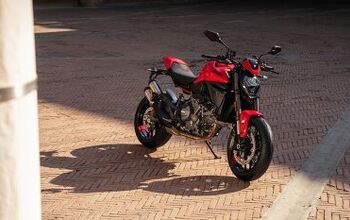
2026 Triumph Trident 660
A significant bump in power is the big news for the Trident 660 in 2026, and it’s truly the standout feature of the updated Roadster. As fun as it is, the Trident 660 is hampered by sensitive ABS, which can really limit the fun if you’re pushing too hard.
Highs
- A good engine made even better
- An attractive $8,995 price tag
- Lots of standard features for the price
Sighs
- Overly sensitive ABS
- Mushy brake feel
- The Trident 800 is only a thousand bucks more
If the bike was good enough back then, there was only one thing Triumph could do to make it better: Add power, of course.
VIDEO: 2026 Triumph Trident 660 Review
The Engine: Minor Tweaks Make A Major Difference
The headline is obvious: more power. The updated 660cc inline-Triple now claims 94 horsepower at 11,250 rpm — a healthy 13.8-hp bump — and 50.2 lb-ft of torque at 8,250 rpm. More importantly, 80% of that torque is available from 3,000 rpm to nearly 12,000 rpm. The redline also climbs 20% to 12,650 rpm.

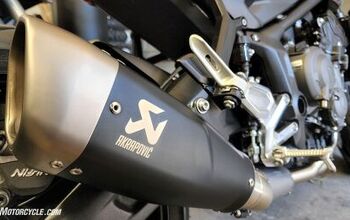
Triumph achieved this by cramming more air into the engine. Gone is the single 38mm throttle body feeding three cylinders; in its place are three 44mm throttle bodies feeding each individual cylinder. That’s a significant upgrade in air volume, which requires a larger airbox. Once the air passes through the throttle bodies, it enters into a revised cylinder head with larger exhaust valves (25.5mm vs. 24.2mm previously), higher-lift exhaust cams (8.2mm lift vs. 7.0mm), and a new engine tune to adjust the power delivery to the back tire. Intake valves and camshaft remain unchanged. There’s also a revised 3-into-1 exhaust to handle the added air and power, updated gearbox internals with new ratios, recalibrated Triumph Shift Assist, and a slip/assist clutch to not only make downshifts smoother, but also to keep pressure on the clutch plates when getting on the gas.
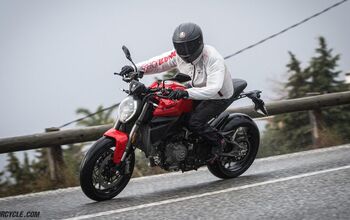
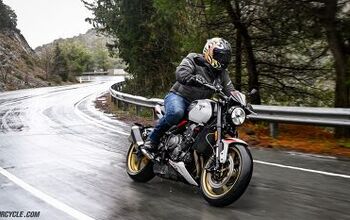
We were invited to Alicante, Spain to ride the new Trident 660 in and around some of the most amazingly twisty and undulating roads Spain has to offer. Right away, the moment I turned a wheel for the first time, I knew the engine was the highlight of the new Trident. It’s hard not to like having more power and torque, and the nature of the Triple was instantly endearing, as it usually is. Throttle response is sharp without being abrupt, and the mill now spins with enthusiasm all the way to redline — and makes power up there, too. Of course, torque is king in real world riding, and at times I’d purposely leave the bike a gear (or two) too high to see if it could pull itself out. Not surprisingly, it could. When given the chance, Triples deserve to scream and be heard, so clicking back down to the appropriate gear (made easy with Triumph’s standard up/down quickshifter) was the order of the day, and watching that tach climb brought a crescendo of music to everyone’s ears (well, at least those of us with helmets on).

It still retains that Triple magic blend of low-end tractability and rev-happy character, but now with more shove. It reminded me of the first time I rode a Daytona 675, which the previous Trident 660 didn’t. In traffic, it’s mostly easygoing, but heat buildup can start to creep in if you’re riding at slow speeds for a while. In the canyons, it’s genuinely fun. Unfortunately, this bump in performance puts a strain on the supporting cast.
The Ensemble
With three throttle bodies instead of one, Triumph revised the steel perimeter frame by effectively clearancing a section of the previous Trident frame to make room. A different forging was used to make the frame thinner without losing stiffness, which meant they could keep the same chassis dynamics while also keeping from making the frame wider between the rider's legs. Clever stuff. With old and new side-by-side, you can actually see a weld on the frame of the new bike that isn’t there on the old. That’s where the slice was taken out, modified, and put back in. Kind of a cheap, easy, and clever idea if you ask me.

Suspension comes by way of Showa and its 41mm SFF-BP USD fork. Travel measures 4.7 inches, but unfortunately, there is zero adjustability on offer. A new Showa shock sits in the back, this one with preload adjustment via a stepped collar and rebound adjustment via a long screwdriver to reach the adjuster. Travel measures 5.1 inches in the rear. Wet weight is a claimed 429.9 pounds, and the 31.9-inch seat height is average for the category. Finally, the bars are 10mm wider at each end (so 20mm wider overall) to help with ergonomics and handling.
Maybe it’s thanks to the wider bars that I felt it was incredibly easy to leverage the bike to turn-in. It initiates turns quickly and is light on its feet. The bike feels narrow between the knees thanks to the redesigned tank, and the overall ergonomics are natural and neutral. At 5-foot, 8-inches and with a 30-inch inseam, I could get the balls of both my feet on the ground at the same time, but flat-footing wasn’t happening. But don’t let that dissuade you. It’s still a bike you can hop on and instantly feel comfortable.

That said, the suspension is clearly tuned more for daily usability than aggressive canyon strafing. Of course, our ride for this event primarily involved canyon strafing, so we got to experience the limits of the chassis, suspension, and brakes quite a bit. The fork and shock are damped on the soft side, which is great for soaking up broken pavement and urban nastiness. Push harder, though, and you’ll start to find the limits. There’s noticeable dive under braking and some wallow if you really charge into a corner. Even though I said earlier that the wider bars make it easy to leverage the bike from side to side, the Trident rewards a smoother, calmer riding style.
For the target audience — commuters and newer riders to Triumph’s “big bikes” (basically anything above Triumph’s 400cc range) — it’s a wholly adequate setup. But a sportbike this definitely is not. And then there are the brakes…

Up front are twin 310mm discs with two-piston Nissin sliding calipers, braided steel lines, an axial-mounted master cylinder (with an adjustable lever) and cornering ABS backed by a six-axis IMU. On paper, this should be a decent setup.
On the road, it’s… fine. Actual stopping power is decent, especially considering the Trident’s $8,995 starting price. But lever feel leaves something to be desired. Despite the braided lines, the axial master cylinder gives the brakes a slightly spongy, vague feel at the lever. The stopping power is there — you just have to squeeze a bit more than you’d like.

The problem with squeezing more is running a higher chance of triggering the ABS, which in the Trident 660’s case, happens. A lot. The ABS calibration is very conservative, even in the less intrusive of the two ABS modes (Wet and Road). It’s nice that there’s cornering ABS capability, but even in a straight line the system intervenes earlier and more often than I’d prefer, especially under aggressive braking on imperfect pavement. This goes back to the earlier statement about riding the Trident smoothly — part of it is to not overwhelm the suspension, the other is to minimize ABS intrusion. But if you ride hard enough, there’s no getting around it. Using the rear brake to take some load off the front (and to settle the chassis) helps, but the only real way to avoid the ABS kicking in is braking earlier (or finding a way to disengage ABS entirely, which Triumph obviously doesn’t recommend). Generally speaking, I’m a fan of ABS for everyday riding situations, and if we were riding in tricky conditions, I’d be advocating for it. But when the conditions are just right, over anxious ABS can kill the vibe quickly.
What Else Do You Get?
By way of having ride-by-wire throttle, the Trident 660 also gets three ride modes: Sport, Road, and Rain. Traction control and ABS settings are tied to each (Wet ABS for Rain mode, Road ABS for both Sport and Road ride modes), and no, you can’t change them. There’s also the aforementioned Cornering ABS and traction control via the IMU, along with standard cruise control, Triumph Shift Assist for clutchless up/down shifts, and MyTriumph connectivity with turn-by-turn navigation. The TFT/LCD combo dash is clear and easy to read, albeit a tad bit small.

Since Triumph is aiming this bike at newer riders potentially looking for their first “big bike” from Hinckley, a particular point was made not just to highlight what’s new, but also to inform potential customers of the bike’s reliability. To that end, service intervals remain a generous 10,000 miles, and Triumph backs it with a two-year unlimited mileage warranty. Valve checks are every 20,000 miles.
The Competition — and the Elephant in the Room
The middleweight naked class is stacked. Bikes like the Yamaha MT-07, Aprilia Tuono 660, Suzuki GSX-8S, and even the CFMOTO 675 NK — if we want to bring another Triple into the mix — are all solid performers. And this is just a partial list.

Back in 2021, the previous Trident 660 proved it could beat the competition. Over the past five years since, most of those contenders have worked on their weaknesses. Now for 2026, so has the Trident 660, meaning it once again deserves a spot in the conversation.
But here’s where I scratch my head. Triumph also sells the Triumph Trident 800 — and it’s only about $1,000 more. That price proximity might cause potential buyers to scratch their heads, too. In Europe, the 660’s 95ps (not horsepower) rating grants it A2 license status, and in that case, it makes sense. In the US, however, where a teenager is free to buy a 200 horsepower rocket as their first bike, tiered licensing isn’t a thing, which makes choosing between the Trident 660 and 800 a lot harder.

Simply put, the 2026 Triumph Trident 660 is all about that engine. It’s lively, engaging, and genuinely fun. The chassis remains friendly and agile, but is let down by soft suspension and overly timid brakes.
If the Trident 800 didn’t exist, or was significantly more expensive, the 660 would be easy to recommend. But for a meager amount more, it seems the Trident 660 is geared towards anyone in a country with tiered licensing, those truly on a budget (especially if insurance cost is a big factor), or those who feel its performance truly is enough for them. That’s a question only you can answer.
Scorecard
Engine | 18.5/20 | Suspension | 12/15 | Transmission | 8/10 |
Brakes | 7/10 | Instruments | 3.5/5 | Ergonomics | 8/10 |
Appearance | 8.5/10 | Desirability | 7/10 | Value | 7.5/10 |
Editors Score: 80.0% | |||||
In Gear

- Helmet: Arai Corsair-X Blade
- Jacket: Vanson Full Throttle
- Airbag: Alpinestars Tech-Air 5 Plasma
- Pants: Alpinestars Cult-8 Jeans
- Gloves: Alpinestars Phenom Air
- Boots: Alpinestars Superfaster Shoes
2026 Triumph Trident 660 Specifications | |
|---|---|
MSRP | Starting at $8,995 |
Engine Type | Liquid cooled, inline 3-cylinder,12 valve, DOHC, 240° Firing order |
Capacity | 660cc |
Bore | 74.0mm x 51.1mm |
Compression | 12:01 |
Horsepower | 95hp at 11,250 rpm (claimed) |
Torque | 50 lb-ft. at 8,250 rpm (claimed) |
System | Multipoint sequential electronic fuel injection with electronic throttle control. 3 rider modes (Rain, Road, Sport) |
Exhaust | Stainless steel 3 into 1 header system with low single sided stainless steel silencer |
Final Drive | X-ring chain |
Clutch | Wet, multi-plate, slip & assist |
Gearbox | 6 speed |
Frame | Tubular perimeter frame, steel |
Swingarm | Twin-sided, fabricated pressed, steel |
Front Wheel | Cast, aluminum alloy, 5 spoke, 17 x 3.5 in |
Rear Wheel | Cast, aluminum alloy, 5 spoke, 17 x 5.5 in |
Front Tire | 120/70 R 17 |
Rear Tire | 180/55 R 17 |
Front Suspension | Showa 41mm upside down separate function big piston (SFF-BP) forks, 4.7 inches of wheel travel |
Rear Suspension | Showa monoshock RSU, with preload & rebound adjustment, 5.1 inches of wheel travel |
Front Brakes | Twin Ø310mm fixed discs, 2 piston sliding calipers, OCABS |
Rear Brakes | Single Ø255mm fixed disc, single piston sliding caliper, OCABS |
Instrumentation | LCD Multifunction Instruments with integrated colour TFT screen |
Length | 79.7 inches |
Width Handlebars | 32.1 inches |
Height Without Mirror | 42.8 inches |
Seat Height | 31.9 inches |
Wheelbase | 55.2 inches |
Rake / Trail | 24.5° / 4.3 inches |
Wet Weight | 430 pounds (claimed) |
Tank Capacity | 3.7 gallons |
Service Interval | 10,000 miles (16,000km) / 12 months (whichever comes first) |

We are committed to finding, researching, and recommending the best products. We earn commissions from purchases you make using the retail links in our product reviews. Learn more about how this works.
Become a Motorcycle.com insider. Get the latest motorcycle news first by subscribing to our newsletter here.
Troy's been riding motorcycles and writing about them since 2006, getting his start at Rider Magazine. From there, he moved to Sport Rider Magazine before finally landing at Motorcycle.com in 2011. A lifelong gearhead who didn't fully immerse himself in motorcycles until his teenage years, Troy's interests have always been in technology, performance, and going fast. Naturally, racing was the perfect avenue to combine all three. Troy has been racing nearly as long as he's been riding and has competed at the AMA national level. He's also won multiple club races throughout the country, culminating in a Utah Sport Bike Association championship in 2011. He has been invited as a guest instructor for the Yamaha Champions Riding School, and when he's not out riding, he's either wrenching on bikes or watching MotoGP.
More by Troy Siahaan







Comments
Join the conversation
Interesting if you like screamers. The GSX 8 group of bikes have 15% more torque and it comes in lower. Better for an every day ride. But hey a few nice toys with turn by turn and a simplistic cruise control. I think I would go for the 800.
Couldn't agree less on twins. I ride a GSX 8S with a 270 crank most days and mostly in the city. As fast as my previous Street Triple up to 100kph. The instant response and low down grunt is great every day. I agree that at high speeds, the triples and fours provide more buz up in the revs while the twins short shifts by comparison. Again my favourite road are very twisty and the multis don't get wound up.
That said I am thinking about the new 800 or a larger four.