


2025 Indian 101 Scout Review

Out of Step (with the cruiser world)

Going against the grain takes brass. Flipping the proverbial bird to convention is part of the American V-Twin aesthetic and an attitude fully embraced by the rising performance cruiser subsegment. Passing on the ‘low and slow’ stereotypes, the 2025 Indian 101 Scout is part of an emerging sect that’s borrowing heavily from West Coast cruiser trends, where suspension, brakes, and handling are championed. Toss in a rough and tumble V-Twin into that mix, and you’ve got a head-turning recipe, indeed.
2025 Indian 101 Scout
The 2025 Indian 101 Scout revives a legendary namesake from the American V-Twin brand. Does it live up to the hype? We brought one into the MO garages to find out.
Highs
- Sporty engine
- Lively handling
- Absolutely brilliant finish
Sighs
- Underwhelming brakes
- Good handling is stymied by limited clearance
- Unsophisticated electronics
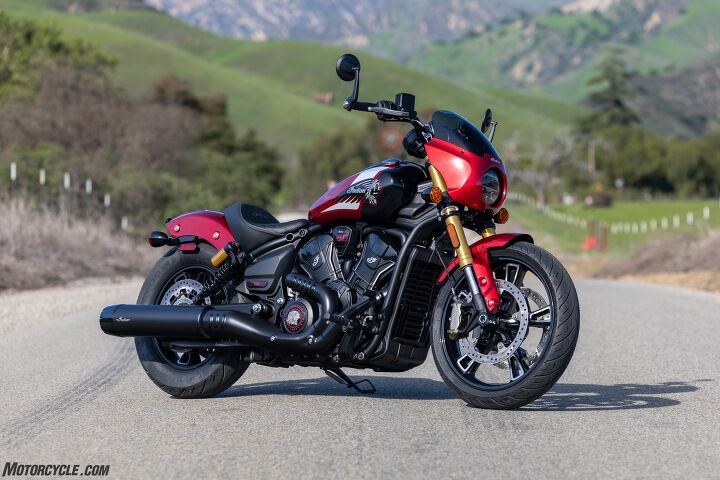
First, a little refresher: Contributing Editor and former MO staffer Tom Roderick covered the redesigned 2025 Indian Scout range, including the Scout Bobber, Scout Classic, Super Scout, Sport Scout, and 101 Scout. There, he learned that the entire Scout platform shares a new tubular steel chassis, an updated SpeedPlus 1250 engine, and various fixings to make them unique steeds. Sir Roderick did a lovely job when he was cruising the Bay Area aboard the Scout quintuplet, yet we had an opportunity to test the 101 Scout with home court advantage.

Where the 101 Scout sits on the top of the heap, bestowed with fully adjustable suspension by way of a stout inverted fork and dual shocks, while also wielding superior stopping power in the form of dual Brembo calipers and 320mm rotors, it also extracts a little more puff out of the SpeedPlus with a model-exclusive ECU tune. In the age of nickel and diming, it’s welcome to see that there are no trim packages to worry about here, unlike some other Scouts. The top-dawg ( RIP DMX; arf, arf, arf, etc.) comes with the brand’s Limited +Tech package – a 4-inch touchscreen full-color TFT display, keyless ignition, as well as the Limited package that unlocks ride modes (Standard, Sport, Tour), traction control, cruise control, a USB port, and premium badging. Pays your money, gets your bike, pardner – how it should be.

The 101 is already schooling the rest of the Scouts on paper, though Indian’s marketing team didn’t land on this moniker by mistake. In fact, they pulled it right out of the brand’s history books with the short-lived but highly revered 1928-1931 101 Scout, designed by accomplished racer and engineer Charles Bayly Franklin — he penned the original Scout and Chief drawings. Franklin’s performance-minded 101 quickly gained renown among riders and racers alike, which is the kind of cultural cachet Indian is latching onto with its latest mid-sized cruiser.
Hearing the SpeedPlus fire up and taking in its fast-paced, sportily syncopated idle is your sign that the cruiser status quo is being left by the roadside, as the liquid-cooled 60-degree V-Twin delivers a wholly modern experience. It’s probably no coincidence that it uses the same V-angle as its race-derived PowerPlus cousins, and due to that shared architecture, a few direct character connections are made. Besides growing to 1250cc, the internals are also heavily reworked with new pistons, larger valves, and the biggest contributor to its free-revving nature, a lightened crankshaft. Between those tweaks and the lengthened gearing, things aren’t what you might expect.

Cruiser dogma dictates that low-end is king and presides over the meaty midrange. Well, some of that is true here. There’s not a lot of immediate grunt off the line, so much so that a generous amount of clutch work is needed to avoid stalling. The dyno figures reflect that soft bottom end, with the SpeedPlus 1250 putting down a healthy 98.8 horsepower at 7,000 rpm and 75.5 lb-ft. of torque at 6,200 rpm. The buzzword we’ll want to sink our teeth into is “free-revving” because that’s precisely what it is – the big twin doesn’t hit its muscular stride until 3,600 rpm, where its midrange captures the spotlight and, even more, continues pulling through to the bitter end. Twisting the throttle for all its worth is quite a reward, though we’d be remiss not to point out that it’s the exact opposite of a typical cruiser powerband.
Indian also makes a point to sidestep convention with a decidedly smooth gearbox aboard the SpeedPlus. The six-speed transmission features a slipper-and-assist clutch on the heavier side in terms of pull, though we’re spared the chunky, clunky shifting experience that’s almost assumed when staring down V-Twins hailing from the Midwest. Proving once again those stereotypes hurt, kids. The Revolution Max engines, much like the SpeedPlus and PowerPlus, are not the agricultural hardware your petty bike-night jokes would indicate. We pointed it out in our Indian Challenger and Chieftain PowerPlus review, but the same feeling exists here – echoes of older European V-Twins – as if the SpeedPlus is a distant relative of Ducati’s Testastretta.

There are a lot of good things here, but it isn’t all hunky-dory. It’s rare to find a modern bike that’s this cold-blooded or as clattery. Once there is heat in the system, the choppy ride-by-wire throttle clears right up, and the unsettling sounds fade. However, it’s curious that Indian’s fueling related struggles resurface on its mid-sized platforms, which we documented on the now-defunct FTR. While we’re on the subject, three ride modes are offered, with Sport being the go-to option – it’s spot on for everyday riding, while the Standard mode’s initial softness borders on apprehensive to the point of becoming fiddly.
Non-IMU-based ABS and traction control are provided, too, but fall short of expectations in a few ways: first, a $17K range-topper deserves IMU-based rider aids. Second, both the ABS and TC are overly cautious: braking over minor bumps sets off ABS, and hard acceleration combined with a quick gear change will trigger TC in a straight line. Luckily, we can disable TC from the 4-inch TFT display, which, much like the infotainment systems of its bagger brethren, takes an uncomfortably long time to initialize. It might seem like griping, but ignoring persistent issues across seemingly unrelated platforms is tough.

Indian is holding the high cards when discussing the nimble chassis. It’s a little odd to think about, yet the new steel tubular frame is said to weigh 12 pounds less than the outgoing aluminum version. In the case of the 101, it sports a 43mm inverted fork with 5.9 inches of travel and dual shocks featuring 3.0 inches of travel – both are fully adjustable, mind you. That said, the suspenders deserve all the praise they can get, not only because they offer meaningful adjustment but also because of the excellent ride quality they offer right out of the box. Earnestly, its competitors will struggle to keep up in that regard.
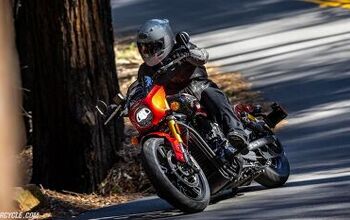
It’s a hustler, for sure. Ready and willing to get tossed onto the edge of the 19-/16-inch wheel combo in a hurry, the 101 Scout’s agility makes mincemeat of its peg feelers before dining upon other hard parts. Unfortunately, it becomes apparent that designers left out a significant bit about the West Coast cruiser style, which is increasing ride height and gaining much-needed ground clearance. Simply put, the cornering party does end with an abrupt record scratch. Sure, it’s a cruiser; within that view, it’s in contention for the class leader. Indian deserve that nod. Though, we’re left wondering what could have been with just a few additional changes.

The same feelings extend to the dual Brembo calipers, which offer double the braking performance of the other single-disk-equipped Scouts, yet fail to deliver anything we’d label as sporty when viewed in an isolated test. A wimpy axial master cylinder is the likely culprit, and thankfully, using both brakes will haul the 529-pound beast to a halt rapidly.
Ride height, seat height, and style are intrinsically linked, which brings us to the quite low solo 25.7-inch-tall seat. A set of motocross-style handlebars sat upon risers and forward controls are standard fare aboard the 101. Together, they all create a long reach to each of the touch points (note male model/Road Test Editor Troy Siahaan’s arms are nearly straight). With your 5-foot 10-inch tall author in the low-slung saddle, there’s no avoiding that my frame is hinged at the waist, and though the flyscreen provides a modicum of wind protection, gripping the wide handlebar at freeway speeds is more akin to holding a sustained seated row. Slammed seats put form over function, and the aftermarket has plenty of quick fixes for that.

Again, it’s a cruiser, and the operative word is cruise, so bopping around town in short stints isn’t a cause for alarm as the soreness sets in after an hour or when at higher speeds. There is a demographic for which it will work, and that’s Magilla Gorilla-sized folk. While Troy and I are simply too pequino for this ride, those that crest into the 6-foot range should find the 101 Scout to be comfortable digs.
Where does that leave us now that we’ve simmered things to their salient points? The 101 Scout shows serious potential in the engine and chassis areas, two major topics of discussion when chewing the fat of any motorcycle. It thumbs its nose at the rest of the class and is better for it. The fantastic midrange power cheers on riders, pushing them to go fast and take chances, while its handling displays a swift footedness that’s certainly opening new windows for cruiser kind. Yet, those same positive attributes can conflict with others. We’re left feeling like it’s fumbling with the closet door of performance when it comes to comfort, ride height, or seating position. Those are fixable problems, but the consumer shouldn’t be the one to left do it.

Scorecard
Engine | 18.5/20 | Suspension | 12/15 | Transmission | 8/10 |
Brakes | 7/10 | Instruments | 3.5/5 | Ergonomics | 5/10 |
Appearance | 10/10 | Desirability | 8.5/10 | Value | 8.5/10 |
Editors Score: 81.0% | |||||
In Gear
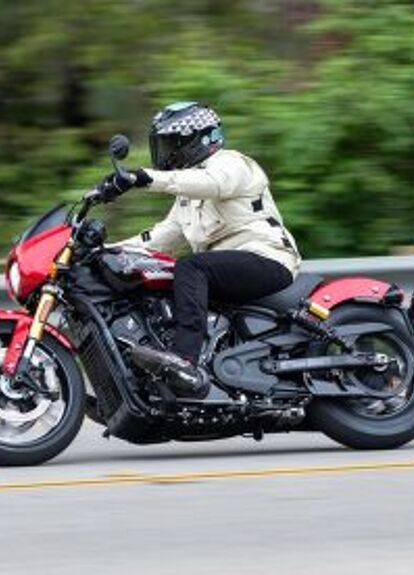
- Helmet: Shoei RF-1400
- Jacket: Alpinestars MO.ST.EQ Field Waterproof Primaloft Jacket
- Airbag: Alpinestars Tech-Air 5 Plasma
- Pants: Alpinestars Cult-8 Riding Jeans
- Gloves: Alpinestars Halo Leather Gloves
- Boots: Alpinestars Superfaster Shoes
2025 Indian 101 Scout Specifications | |
|---|---|
Engine Type | 1,250cc liquid-cooled, DOHC, 4-valves per cylinder, 60° V-Twin SpeedPlus engine |
Bore and Stroke | 104 mm x 73.6 mm |
Compression Ratio | 12.5:1 |
Horsepower | 98.8 hp at 7,000 rpm (measured) |
Torque | 75.5 lb-ft. at 6,200 rpm (measured) |
Clutch | Wet, multiplate clutch |
Transmission | 6-speed |
Final Drive | Belt, 146 tooth |
Front Suspension | 43mm fully-adjustable inverted fork, 5.9 inches of travel |
Rear Suspension | Dual fully-adjustable piggyback shocks, 3.0 inches of travel |
Front Brake | Dual 320mm semi-floating rotor with four-piston calipers |
Rear Brake | Single 298mm semi-floating rotor with single-piston caliper |
Front Wheel | 19-inch five-spoke cast wheel |
Rear Wheel | 16-inch five-spoke cast wheel |
Front Tire | Metzeler Cruisetec 130/60B19 61H |
Rear Tire | Metzeler Cruisetec 150/80B16 77H |
Rake/Trail | 29°/4.8 inches |
Wheelbase | 61.5 inches |
Seat Height | 25.7 inches |
Weight | 529 pounds (as shipped, claimed) |
Fuel Capacity | 3.4 gallons |

Become a Motorcycle.com insider. Get the latest motorcycle news first by subscribing to our newsletter here.
A lifelong interest in anything with two wheels, Nic combined his passion for motorcycling with a rare and mysterious skill known as typing to join the motojournalism ranks. Motorcycle.com's Senior Editor and sometimes club racer displays an unrivaled desire to sample baked goods across the globe and partake in post-track day celebratory pizza.
More by Nic de Sena




Comments
Join the conversation
I'm not a cruiser guy, might as well get that out in the open right away. Currently riding a Triumph 1050 Speed Triple. I would love to get an Indian but they never make a bike I would buy. The FTR was the closest they have come. But I'm not going to take a step down in power, braking and handling. Low seat heights are for circus monkeys. I really don't care about the electronic nannies, I've never had them so maybe I don't know what I'm missing but at these low performance levels who really needs them? 3" of rear suspension travel and forward controls are an immediate dis-qualifier. Less than 100 HP out of 1250 CC? That's not going to cut it either.
Come on Indian, the original 101 Scout was a performance bike in it's day. Make me a naked street fighter I can ride in the mountains on seriously twisty roads and not be embarrassed by 20 or 30 year old vintage bikes.
All motorcycle types have their specific 'performance envelope'...one wouldn't race MX with a Honda Goldwing, nor would you take a cross country tour on Suzuki RM-Z250.
Cruisers have a very narrow performance envelope, and when done correctly, they perform brilliantly within that envelope....aesthetics, paint/chrome quality, low seat height, instant TORQUE...a great relaxed, 'parade bike'.
Adding more HP and better brakes does NOT transform the above into a sporty/sport bike...neither the ergos nor the chassis limitations allow that to happen.
But then again, when it comes to 'cruisers'...poseurs need only apply, so there's that